
<May 10th, 2024>
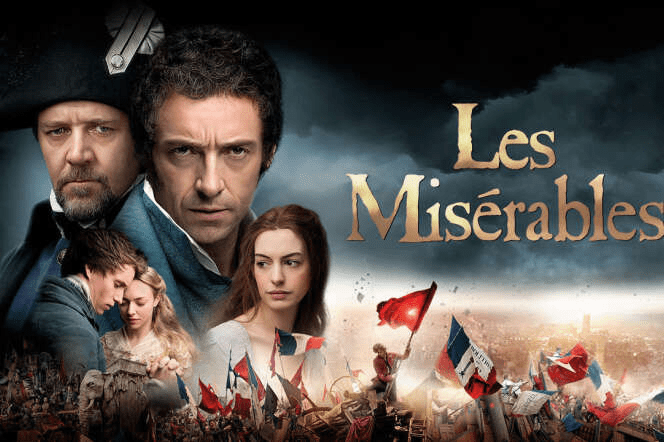
During our scheduled class time on Friday, we gathered to watch the 2012 film Les Misérables as a group. The main cast featured esteemed actors such as Hugh Jackman (Jean Valjean), Anne Hathaway (Fantine), Russel Crowe (Inspector Javert), Eddie Redmayne (Marius Pontmercy), and Amanda Seyfried (Cosette), comprising a truly remarkable team of actors.
The movie’s fast-paced plot impressively captured the essence of French culture and the harsh realities of the era. The stark socioeconomic divisions sparked a sense of rebellion among the common folk, who endured immense sacrifices for mere survival. Centering on the perspective of the impoverished, the film vividly depicts a world where starvation was rampant and the well-being of the populace was tragically disregarded.
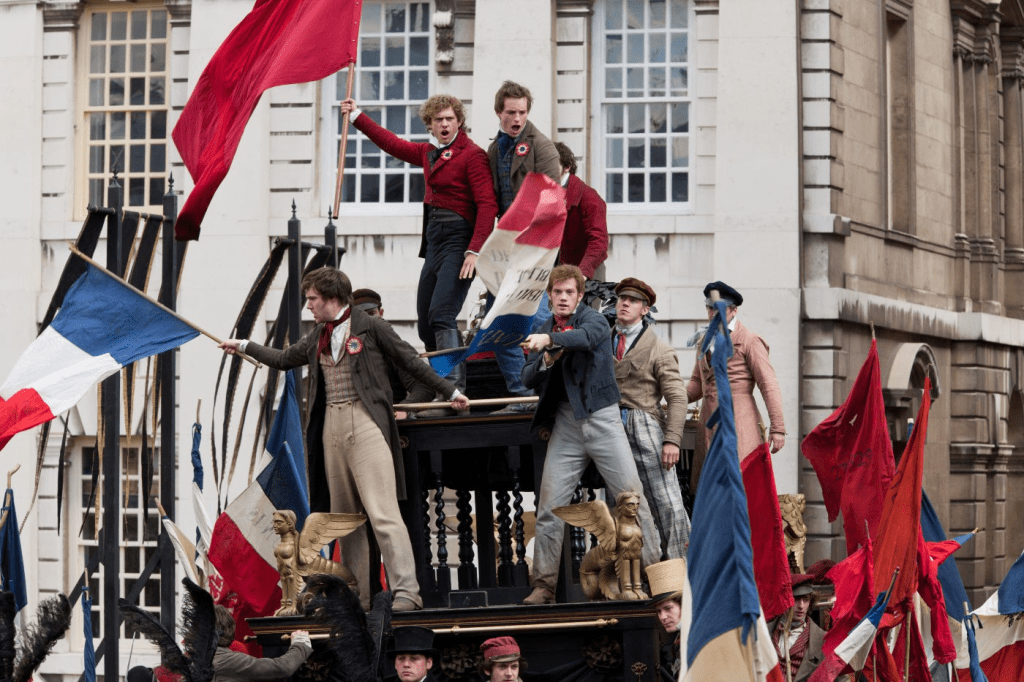
Relation to the French Revolution
Les Misérables doesn’t precisely depict the French Revolution, but rather explores interconnected themes and historical elements in nuanced ways.
In historical context, Les Misérables unfolds against the backdrop of early 19th-century France, a period affected by the aftermath of the French Revolution, which happened about forty years earlier. The Revolution, spanning from 1789 to 1799, ushered in sweeping social, political, and economic transformations in France, resulting in the abolition of the monarchy and the ascent of the French Republic. The Revolution’s sequence of events, including the Reign of Terror and the subsequent establishment of Napoleon’s regime, cast a long shadow over the societal landscape portrayed in the film.
Thematically, both the French Revolution and Les Misérables delve into the issues of social injustice, inequality, and oppression. The Revolution surged forth from discontent with the feudal system, aristocratic entitlement, and economic disparities. Likewise, the film delves into the trials of the underprivileged and marginalized, exemplified by characters like Jean Valjean and the destitute masses of Paris. It vividly portrays the harsh aftermath of the Revolution for the lower classes, illustrating the enduring hardships of poverty, exploitation, and repression.
The French Revolution was propelled by the noble ideals of liberty, equality, and fraternity. Though the Revolution fell short of fully manifesting these aspirations, its legacy ignited the flame of social justice and human rights advocacy for generations to come. In Les Misérables, characters embody this quest for liberation from oppression and inequality. Jean Valjean’s journey toward redemption and Cosette’s desire for happiness symbolize the timeless human longing for freedom and equality.
Les Misérables presents characters deeply engaged in the revolutionary fervor of the time. These characters embody the revolutionary ethos of liberty, equality, and justice, resonating with the aspirations of the French Revolution. Overall, the French Revolution and Les Misérables share common themes of social upheaval, injustice, and the quest for freedom, making them interconnected in various terms.
 Revolutionary Cities