
Dr Bjork-James and An took us on a walking tour of Paris through the lens of the French Revolution. We started at the Bastille and ended at the Assemblée Nationale. It was the perfect way to orient ourselves geographically before we dive even deeper into the revolution in the days that will follow.
Stop 1: Bastille
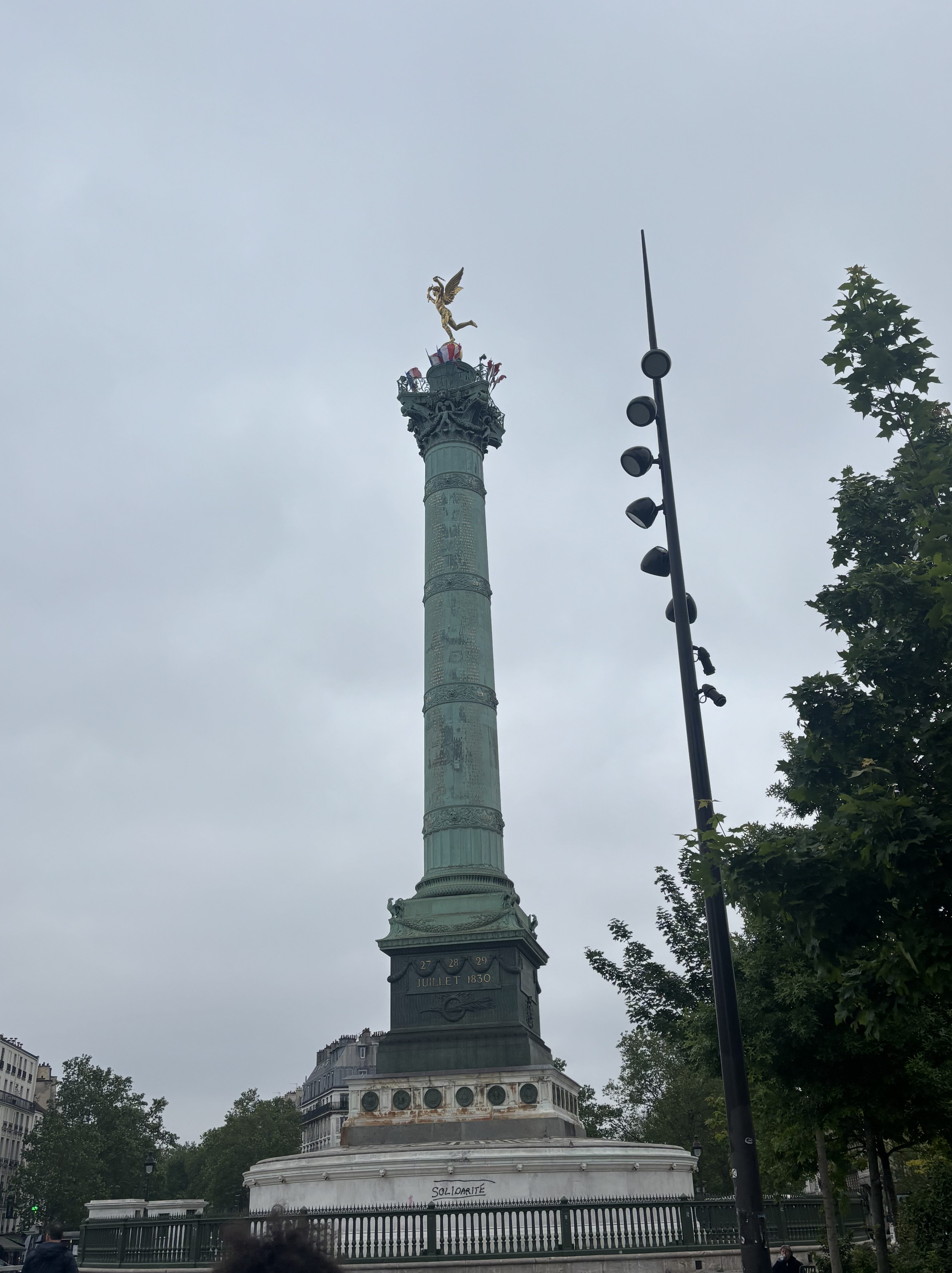
Our first stop of the day was at Bastille; which is, arguably, where the revolution started.
The storming of the Bastille on July 14, 1789, marked a critical flashpoint in the French Revolution. Bastille was a medieval fortress and prison in Paris, symbolizing the absolute and arbitrary power of King Louis XVI’s Ancient Regime. By the time of its storming, the prison held only a few inmates, but its capture by the revolutionaries was significant as a symbol of liberation from tyranny.
The attack on the Bastille was fueled by the common people’s rising frustration with severe economic hardship, exacerbated by food shortages, and a fear that the king would crack down on the growing calls for reform.
The fall of the Bastille not only provided the revolutionaries with much-needed arms but also sent a powerful message that the people were ready to challenge the old order. This event became the iconic act of revolution and is celebrated annually in France as Bastille Day, a national holiday that commemorates the beginning of the French Revolution.
Stop 2: Musee Carnavalet
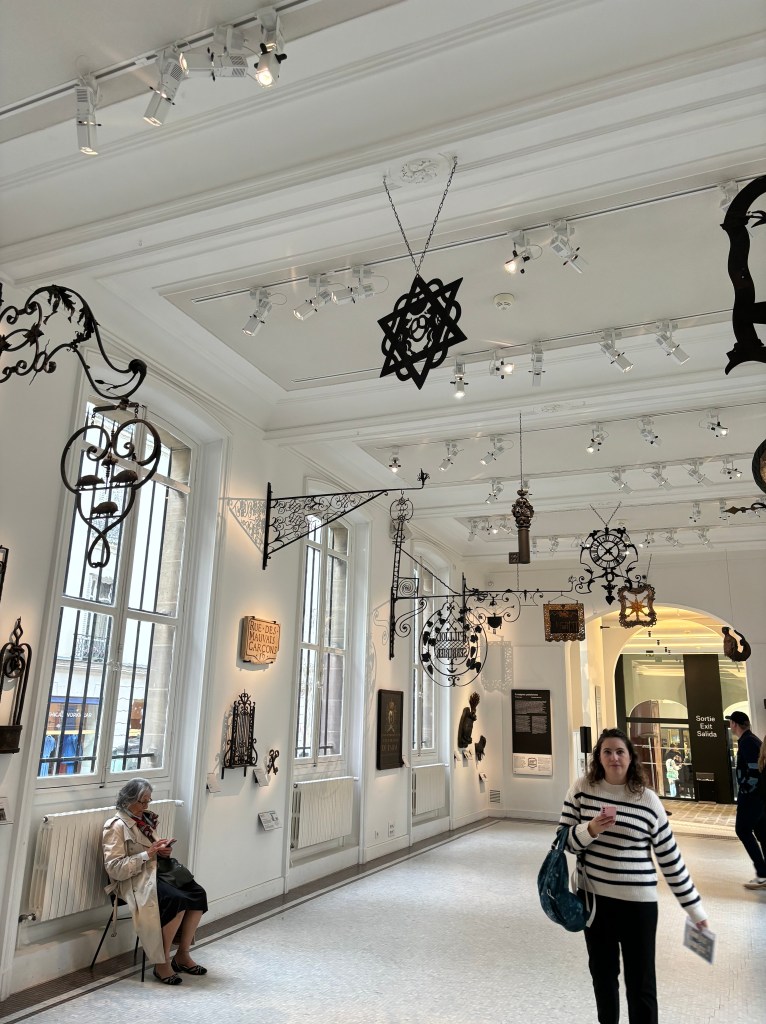
After stopping at Bastille, we walked over the the Musee Carnavalet. This museum is a museum dedicated to the history of Paris. They had lots of artwork, letters, and memorabilia from the Revolution. Walking through the museum really gave me a sense of what it would have been like to live in Paris during the Revolution. All of the artwork in the museum was incredibly detailed and helped me paint visual pictures in my mind of the Revolution (Les Miserables also helped with this). Even though this museum was not itself a part of the Revolution, it was a great addition to our walking tour.
Stop 3: l’Hotel de Ville
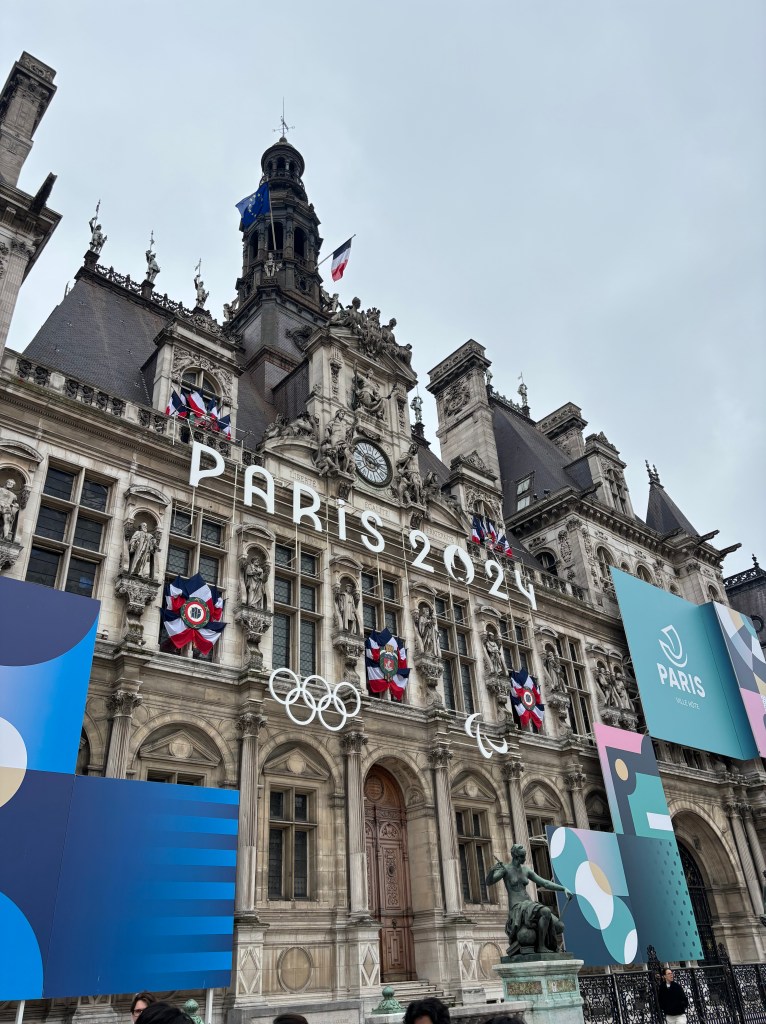
Next we walked over the l’Hotel de Ville. This, like Bastille, was an important location during the French Revolution.
L’Hôtel de Ville in Paris, the city’s town hall, held significant importance during the French Revolution. It was a central hub for political activity and a symbolic location where several key events unfolded. As the seat of the Paris Commune, which was the city government during the revolution, L’Hôtel de Ville became a place where decisions were made, revolutionary plans were formulated, and decrees were issued.
One of the most crucial moments at L’Hôtel de Ville occurred on the night of August 9-10, 1792, when insurgents organized themselves before storming the Tuileries Palace. This act effectively marked the overthrow of the monarchy and led to the proclamation of the First French Republic shortly thereafter.
Throughout the revolution, L’Hôtel de Ville was a gathering place for revolutionary groups and the populace, serving not just as a governmental building but also as a symbol of the people’s authority and sovereignty. The building’s significance extended beyond mere administrative functions; it was a potent symbol of revolutionary power and democracy in action.
Stop 4: Lourve
Following the l’Hotel de Ville, we walked over the Louvre. The Lourve was important to the revolution for several reasons. For one, before the Revolution, the Louvre served as a symbol of the monarchy’s extravagant lifestyle and disconnectedness from the people of Paris. Its shift from royal to public ownership during the revolution reflects the revolutionary’s goals of liberty and equality. The Louvre’s central location in Paris also made it an important site during the Revolution. It was close to other key locations, making it significant in the political dynamics and events of the time. Lastly, during the Revolution, the Louvre was transformed into a public museum. In 1793, the revolutionary government opened the Lourve and filled it with the royal collections. The democratization of access to art and culture was a radical departure from the status quo in Paris which had previously only given the elites access to such art. Overall, the Lourve’s importance during the French Revolution lies not just in its physical transformation, but also in its symbolic representation of a shift from royal exclusivity to public ownership. This transition reflects broader revolutionary changes in French society, culture, and politics.
Stop 5: National Assembly
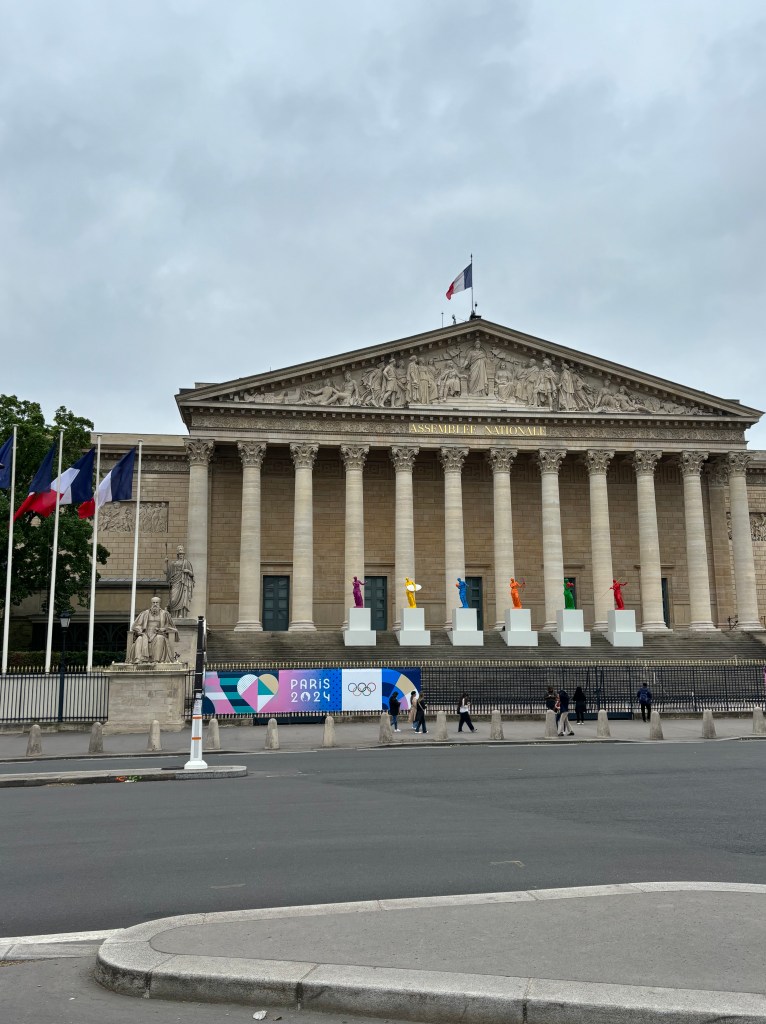
Our final stop of the day was at the National Assembly. The National Assembly is often viewed as a key indicator of the success of the French Revolution because it represented a significant switch towards a more democratic form of governance and the establishment of a constitutional monarchy. There are a couple of reasons why the National Assembly is viewed as a symbol of the revolutionary’s successes. For one, the formation of the National Assembly in June 1789 marked a pivotal moment in French history. It was initiated by the Third Estate, which represented the common people of France, declaring themselves the National Assembly and asserting that they had the authority to govern France. Additionally, the National Assembly drafted the 1791 Constitution which laid the foundation for modern democratic governance. This constitution limited the powers of the king and established a legislative body that was elected by the people, thereby enshrining the principles of representation and the rule of law. The National Assembly also serves as a symbol of unity and representation in France. The Assembly eventually included representatives from all three estates. This symbolized a new era of collective governance. This inclusivity was a significant departure from the exclusivity of past regimes.
 Revolutionary Cities