
The French General Assembly tour is certainly one of my favorite tours we have gone on thus far. The building encompasses Parisian history better than any landmark I have seen because it has royal and democratic aspects. It is a historical collage of a multitude of different important French cultural ideas all combined into one building.
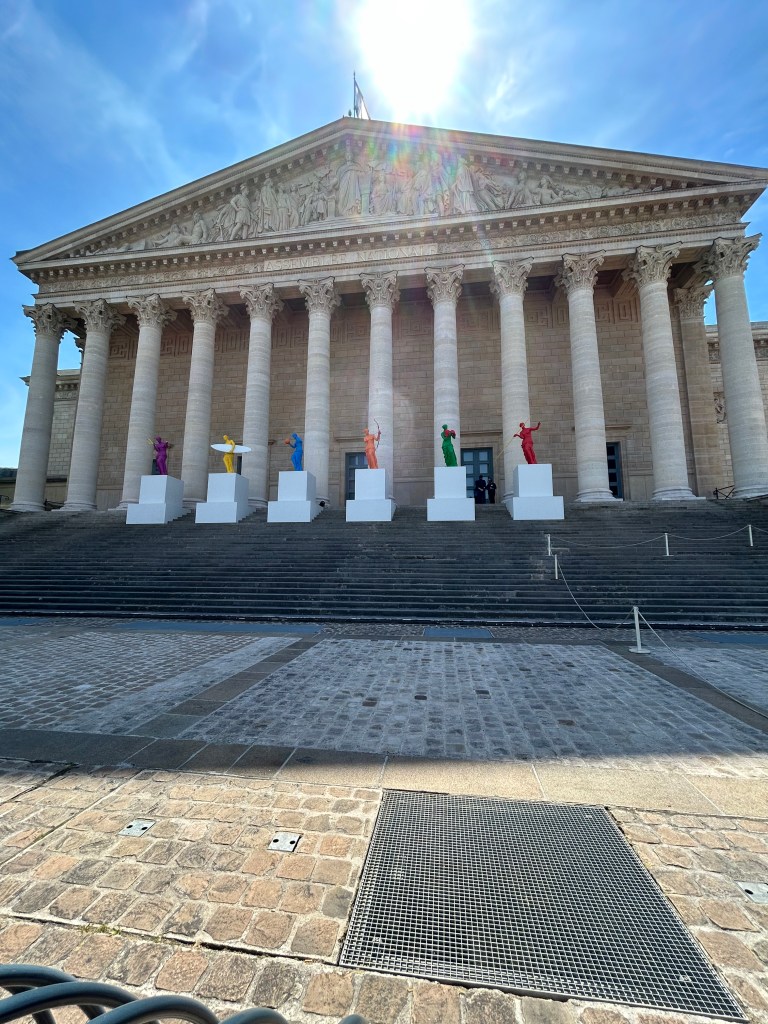
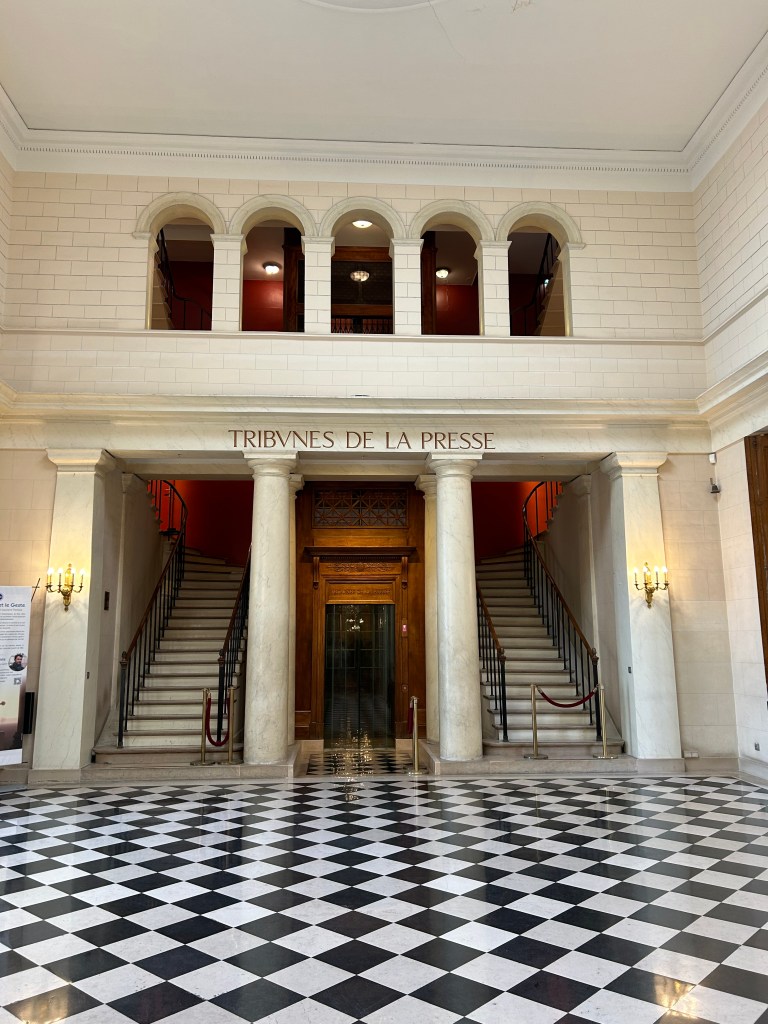
In terms of the royal and democratic aspects, the building is full of statues of different Gods, but these Gods are also Gods relating to justice and democratic ideals of the revolution. Similarly, the press has access to the main hallway on a mezzanine style balcony, which clearly promotes freedom of the press. Similarly, the press and common citizens look down upon the legislators and the speaker which clearly demonstrates democratic ideals pertaining to representation and equality.

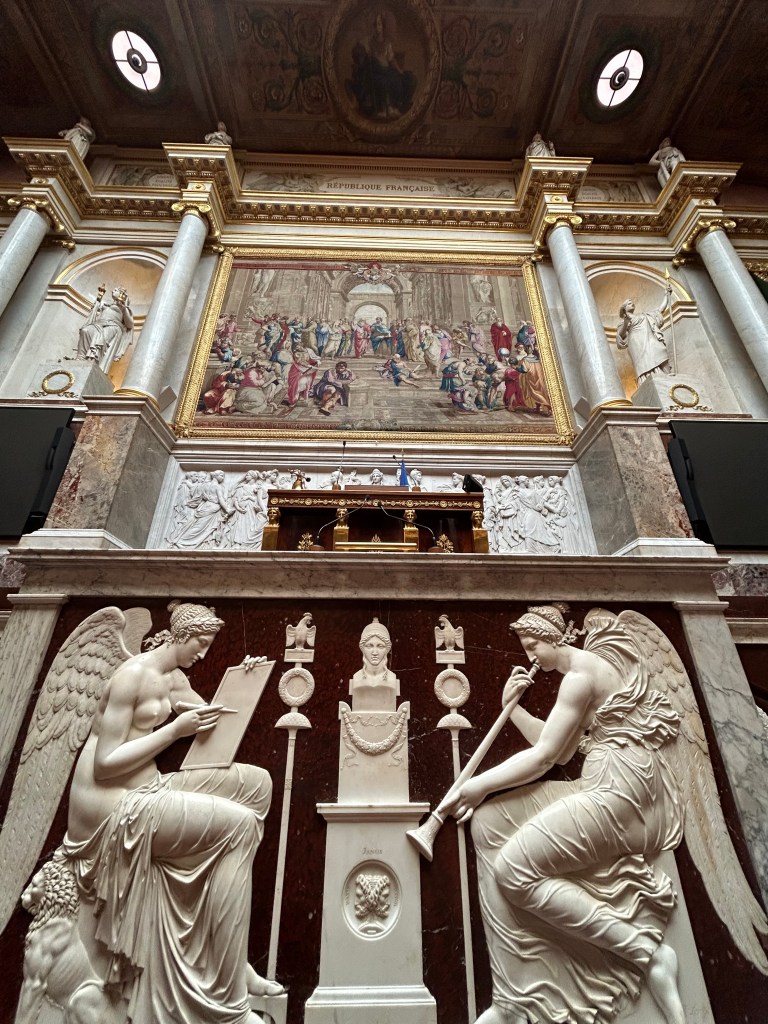
In terms of the more exclusively royal aspects, the ceilings in many rooms are painted like those in the Palace of Versailles or in churches. While the figures may not be religious, the mural style looks very similar to that of royalty and churches. Also, the main speaker’s platform which resembles a royal pedestal, somewhat contradicts this model of the people and press being equal to each legislator. The speaker’s platform also has a painting similar to the Last Supper, where each figure is honoring a single individual, which also contradicts this democratic concept.
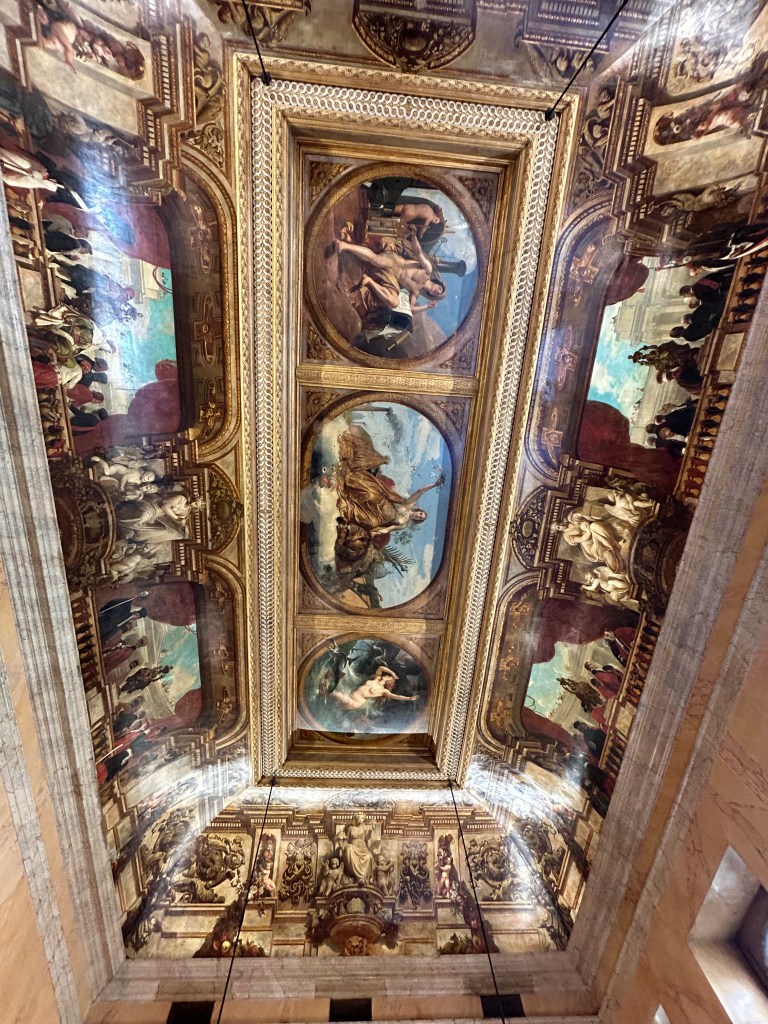
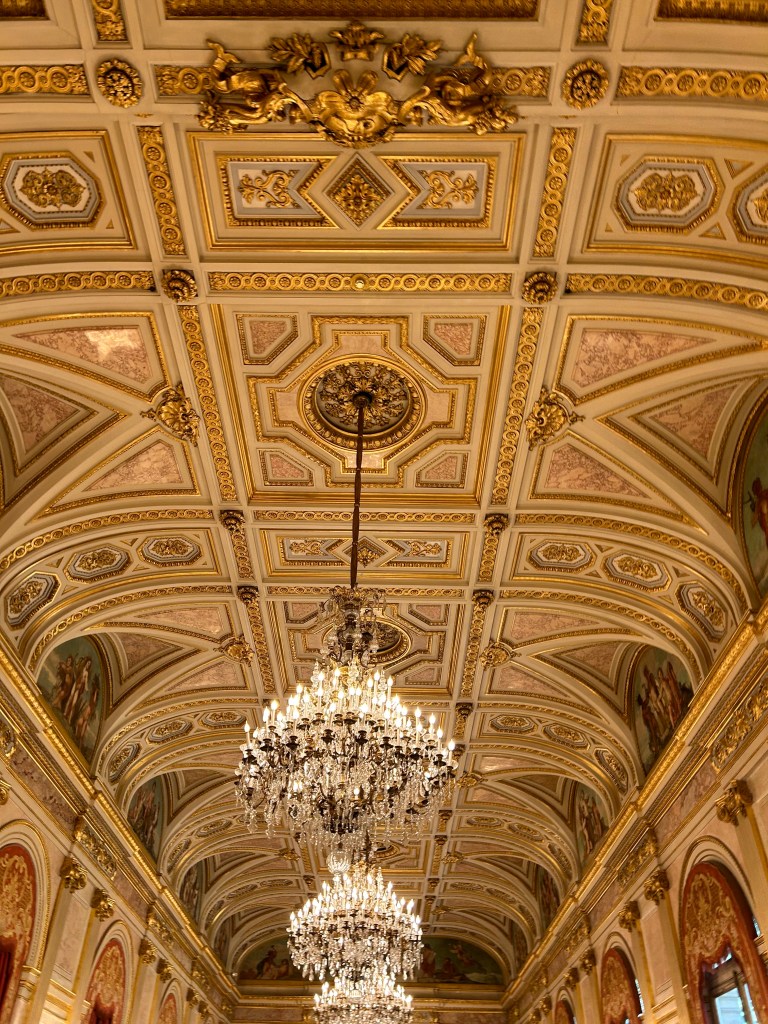
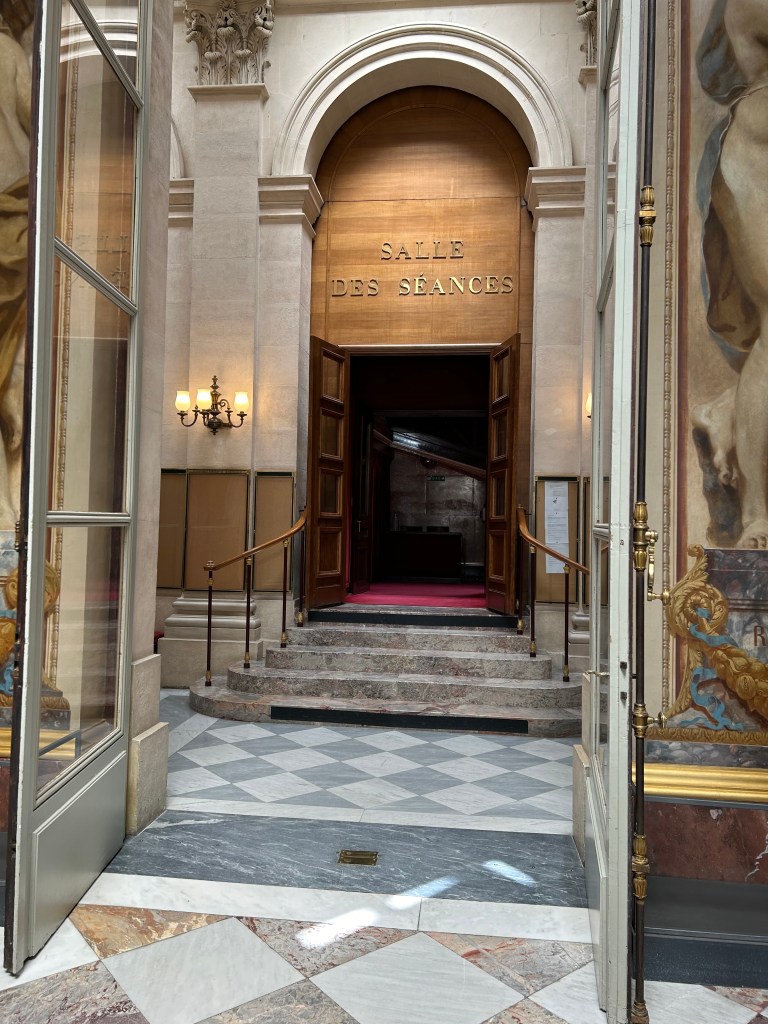
The other architectural choices in the building are very similar to that of Versailles. The elegant chandeliers and detailed murals lining the ceilings make it feel like a palace. Some of the ceilings and walls were also lined with gold, which feels very Versailles like as well. Also, many of the walls were lined with mural like paintings that resemble church walls. The assembly room itself is also reminiscent of a chapel. Besides a king presiding over the assembly, the pedestal area also looks somewhat pulpit-like.
Overall, the layout and different aspects pertaining to religion, royalty, revolution, and democracy are what make the General Assembly building such a finite representation of revolution itself. Using the elegance of churches and royal palaces to reinforce ideas of democracy and revolution is brilliant (although maybe not intentional) because it uses structures and groups like royalty or the church that the people felt were suppressing them to beautify the fruits of the revolution led by the people. While seemingly contradictory, it is not because turning resources, spaces, and concepts, of what used to be exclusive into a structure that encompasses all people and democracy takes back those structures and gives them to the people.
 Revolutionary Cities