
While the Palace of Versailles stands today as an iconic garden and museum representing the opulence of a specific moment in history, the National Assembly serves as the cradle of French democracy in the modern age, and visiting both monuments enabled me to feel and recognize their differences through the context of the French Revolution. In fact, I found it fascinating that both Versailles and the National Assembly were repurposed into its current roles to better serve the greater public while still retaining the royal grandeur before it. Walking through the historical precincts of the National Assembly in Paris, I felt the palpable weight of the revolutionary fervor that once permeated these halls. This site, once a focal point for the clash between the monarchy and burgeoning democratic ideals, encapsulates the dramatic transformation that defined the French Revolution. The National Assembly not only served as the heart of legislative action but also as the crucible where new political realities were forged.

The formation of the National Assembly was a direct response to the inequities and tensions that had been simmering in French society. In “The French Revolution: A Very Short Introduction,” William Doyle details how the Estates-General, convened in 1789 to address France’s financial woes, became a battleground for the Third Estate’s quest for representation. The refusal of the clergy and nobility to engage in fair voting practices led the Third Estate to declare itself the National Assembly, a bold move that signaled the beginning of a new political era. And standing in the assembly hall, I felt that I could almost hear the fervent debates and impassioned speeches that defined this revolutionary body. The Tennis Court Oath, taken on June 20, 1789, was a defining moment where members of the National Assembly vowed not to disband until a new constitution was established. This act of defiance against royal authority underscored their commitment to reshaping the French political landscape, laying the groundwork for a society based on equality and democratic principles.

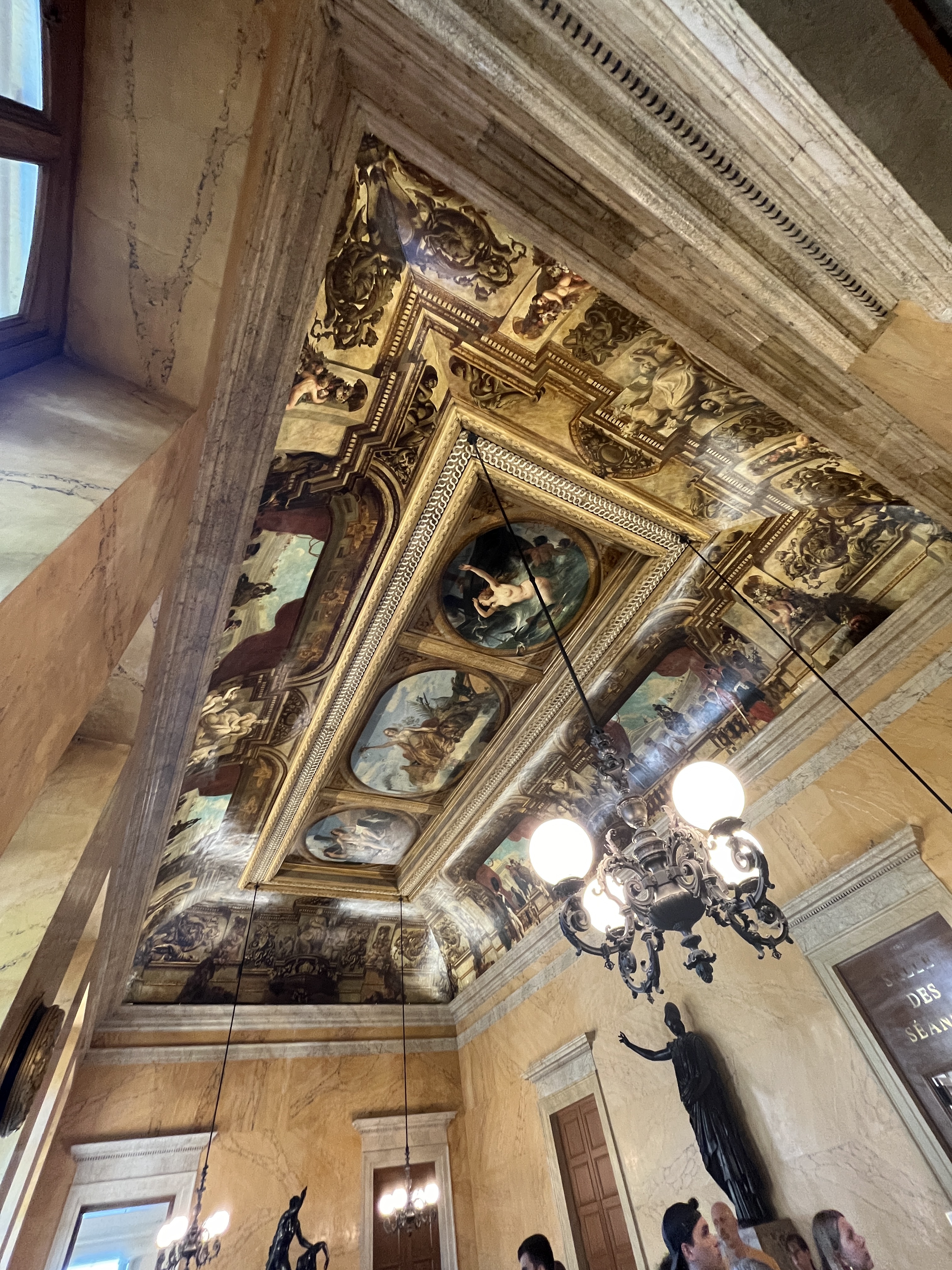

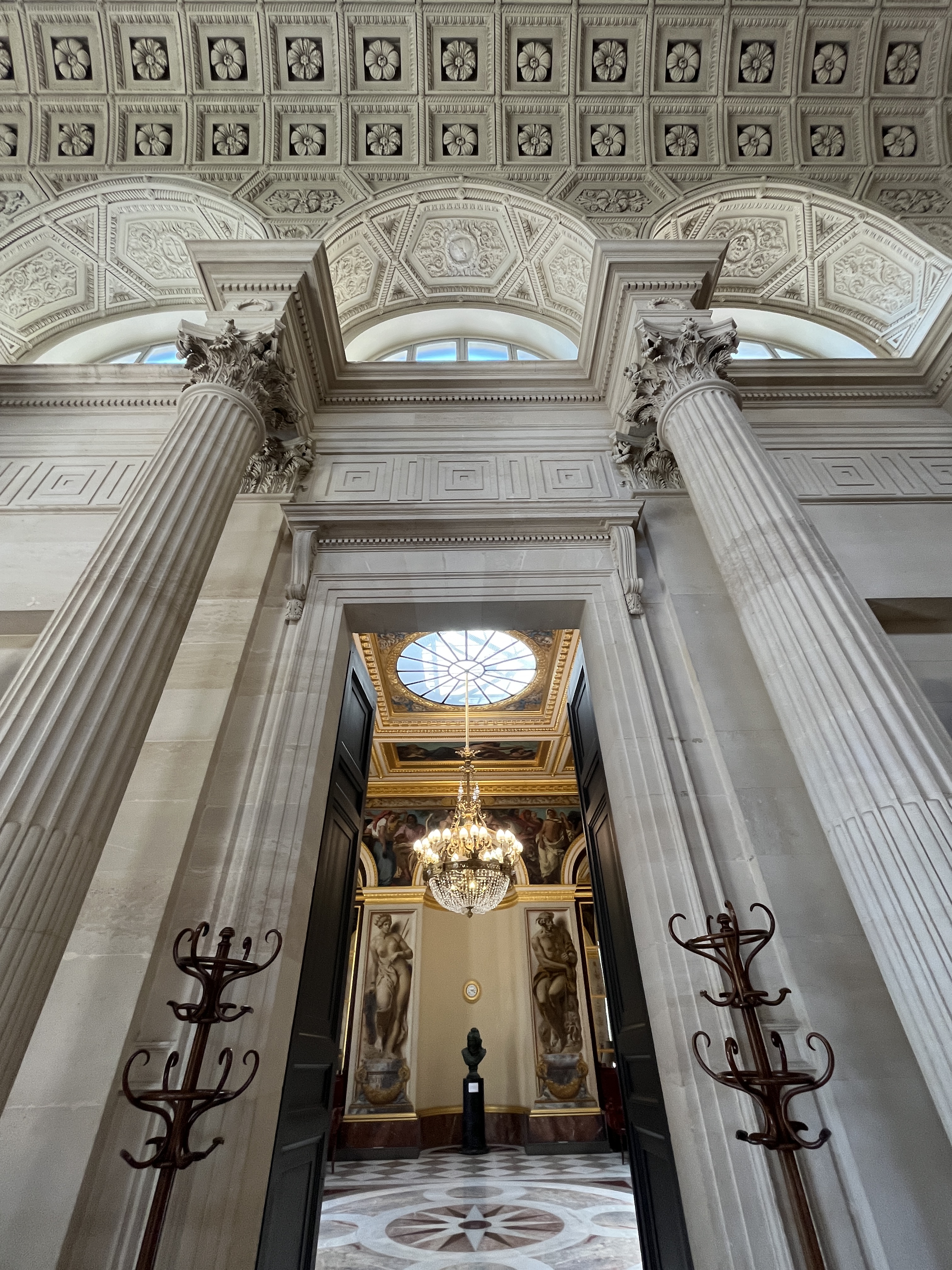
Sewell’s “Historical Events as Transformations of Structures” offers a compelling framework to understand the significance of the National Assembly’s actions. The Assembly’s formation and subsequent declarations represented a profound structural dislocation, challenging the long-standing power dynamics of the ancien régime. This shift was deeply symbolic, embodying the transfer of sovereignty from the monarchy to the people, and as I wandered through the corridors of the National Assembly, I reflected on how this institution became a beacon of hope and change for the French populace, quite literally transforming the previous royal space into the foundation of democratic processes. The Assembly’s decrees, such as the abolition of feudal privileges and the declaration of the Rights of Man and of the Citizen, marked significant steps towards dismantling the ancien régime and establishing new political norms. These actions resonated with the public, galvanizing support for the revolutionary cause and redefining the concept of governance.
The National Assembly also played a critical role in managing the economic and social crises of the time, addressing deeply rooted issues that led to the French Revolution in the first place. Doyle describes how the Assembly grappled with the fallout from poor harvests and rising bread prices, issues that had exacerbated public discontent. By addressing these economic challenges through legislative reforms, the Assembly not only alleviated immediate suffering but also laid the foundation for a more equitable society. Emotion, as Sewell emphasizes, was a driving force in the actions and decisions made within the National Assembly. The fervor and urgency that characterized the Assembly’s proceedings were reflections of the broader societal upheaval and the populace’s desire for change. The passionate debates and fervent advocacy for reform were not just political maneuvers but expressions of a collective aspiration for a just and fair society.
One of the most striking aspects of the National Assembly’s legacy is its role in redefining the relationship between the government and the governed. By asserting the principle of national sovereignty, the Assembly fundamentally altered the dynamics of political power in France. This paradigm shift was reflected in details I noted during our visit. For instance, the openness of even being able to step foot into the National Assembly and seeing the spaces representatives work in everyday was truly special. Purpose-designated spaces for viewers and journalists in set galleries further demonstrated this commitment to the people through transparency and relationships.
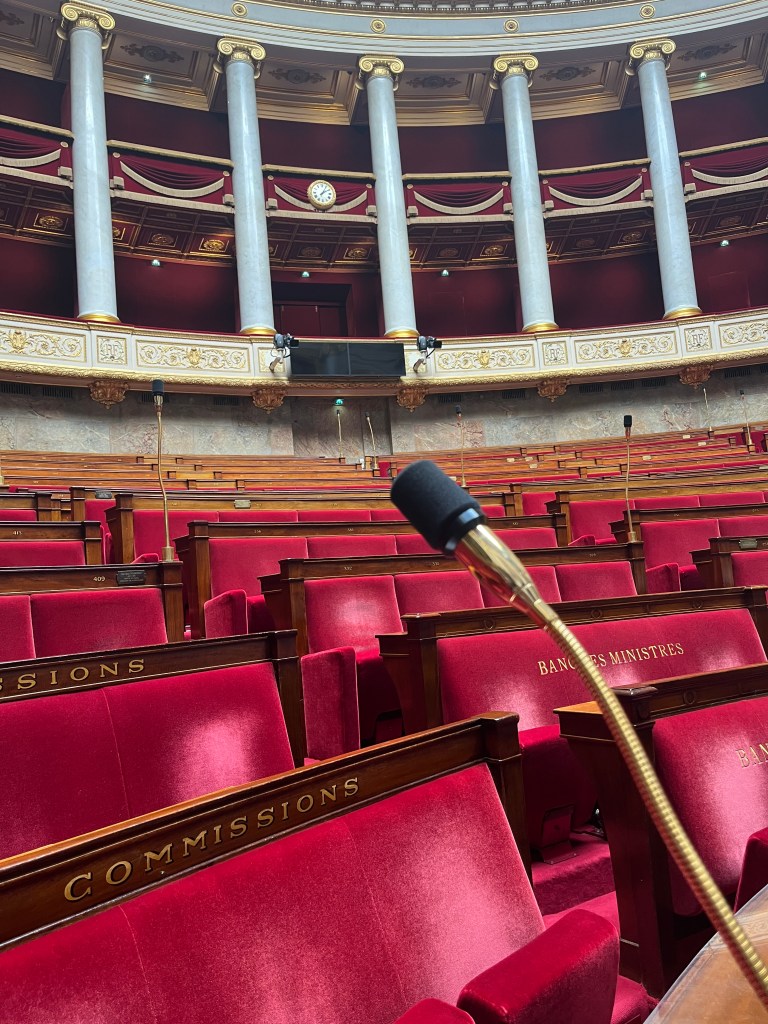
In conclusion, the National Assembly stands as a monumental symbol of the French Revolution’s ideals and aspirations. Its actions, design, and formation marked a pivotal shift from monarchical absolutism to democratic governance, embodying the revolutionary spirit of equality, liberty, and fraternity. Exploring the historical National Assembly enabled me to gain a deeper appreciation for its role in shaping modern political thought and its enduring impact on the quest for democratic ideals. Through its legislative and symbolic actions, the National Assembly not only transformed France but also set a precedent for democratic movements worldwide.
 Revolutionary Cities