
As usual, Parisian architecture and its museums never cease to take my breath away. The Louvre Museum was another unparalleled experience, much like the Palace of Versailles with its rich history, flawless interior design, and abundance of artwork collection. Walking through the exhibits from multiple regions of the world, I’ll provide an outline of the path I took in order to cover most of the Louvre Museum and its expansive object collection in approximately six hours.

Louvre Museum
I first arrived at the Ancient Greek exhibit, and there were many objects to be observed. The exhibit was formatted in such that there were objects on either side of the large room, and individual objects encased and scattered throughout the space. Some important objects I noted were from the Orientalizing and Cycladic Period, which I appreciated because I learned about them in my History of Art class I took on Western Medieval Art last fall semester. One thing I found interesting was that they didn’t decide to encase a huge brown pot, and instead put it next to a door. I found that a bit abnormal, because that would mean thousands of people might take the opportunity to touch it and risk damaging the object. From these concerns, a critical question arises: How do curators balance the need for public engagement with the preservation of historical and cultural artifacts? While I understand that this may be a difficult question to answer, I genuinely hope that museums are all able to effectively take care of these precious objects that hold cultural and historical significance.
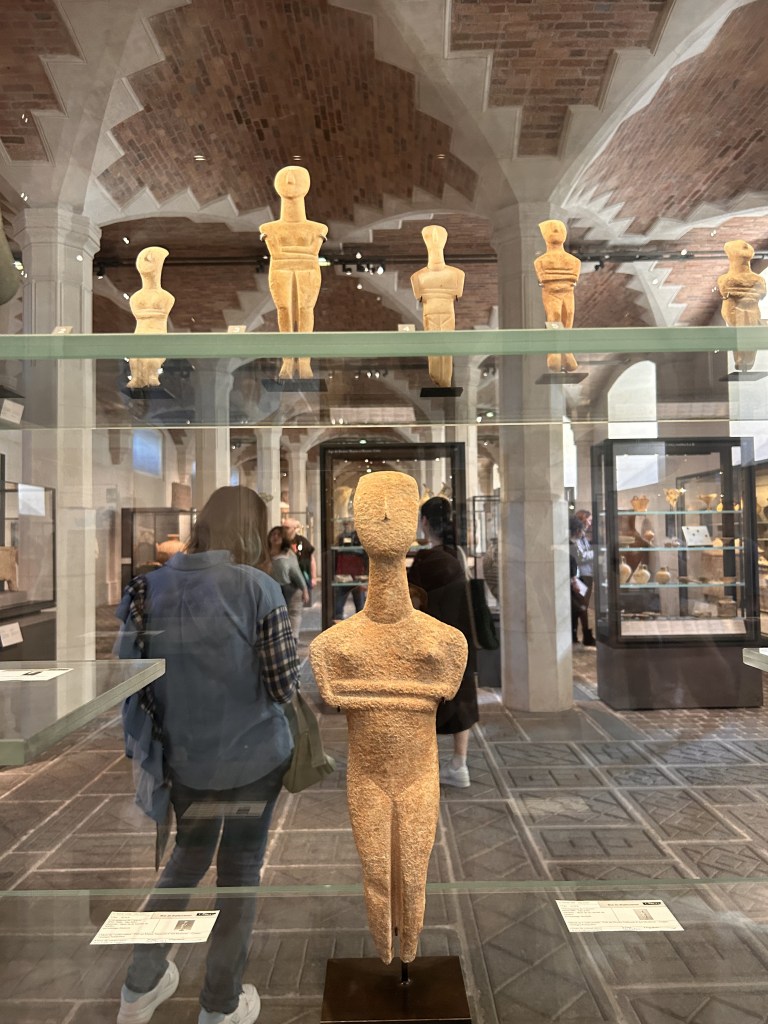
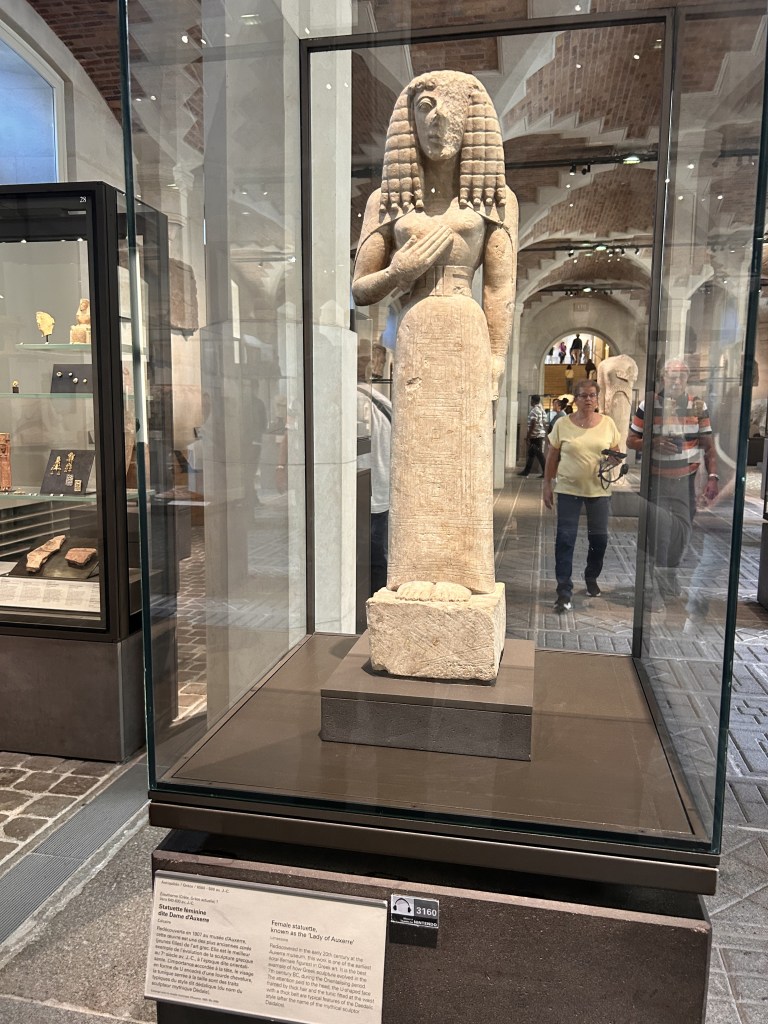

I then reached the Galerie des Antiques, where I saw the iconic statue of Venus de Milo. The statue itself was beautiful, despite the lack of arms which also correlates with the mystery of her identity. I noticed how she was intentionally placed to be seen when you first enter the gallery, which made me question about the decision making processes that museum designs must experience in organizing their objects in an efficient and effective manner.

The most shocking revelation that inspired me to write my blog on the Louvre’s object collection was the Ancient Egyptian exhibit. Upon walking up a staircase, I was greeted by rather unmannerly rows of empty sarcophagi on both sides. My curiosity compelled me to draw my phone out to capture a moment that I might never get to witness again, but my inner consciousness told me that it felt disrespectful. I was even more baffled to discover that the Louvre also had an actual mummy in their Egyptian collection. Despite the intention to inform the public about the process of mummification that is so integral to Egyptian culture, I feel that it is incredibly inhumane and demoralizing for the mummy, for they were once a human too. This arises critical questions that I hope the Louvre curators consider: What are the ethical considerations that museums weigh before displaying human remains? And how do curators manage to balance the educational value of displaying human remains while also maintain the dignity and respect for the individual whose life ended thousands of years ago?

After catching my breath, I ventured onto the crowned jewels exhibit, where I was enchanted by the dancing light of diamonds and sparkles of gold and emerald just mere inches away from my grasp. I wondered whether the Louvre held these objects as their own or if they were on loan, but I remembered that they may have descriptions to determine their origins. And of course, I had to see the Mona Lisa, which was honestly a little bit anti-climatic given the other wondrous and large paintings surrounding the artwork.
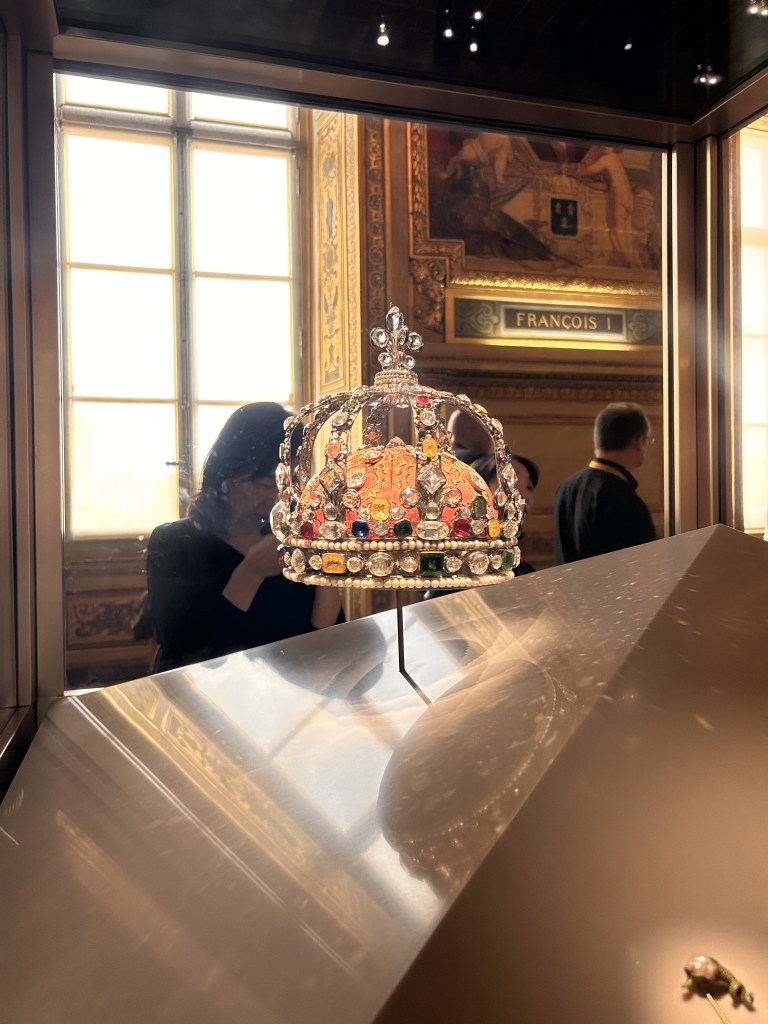
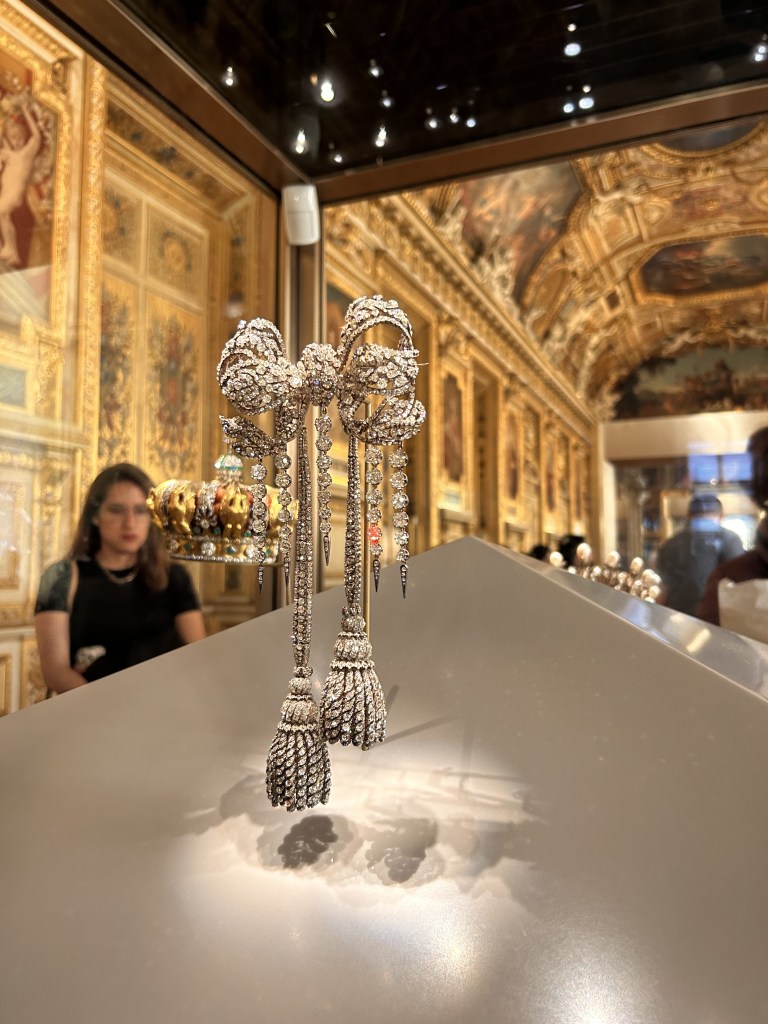

What I found to be incredulous was the small exhibit isolated from the rest of the illustrious exhibits dedicated to the Asian, South American, and African region. None of the objects except for one had paired descriptions, so I wouldn’t know about the history regarding the object except for its origins. And once again, I noticed how some objects did not have the protective glass, so visitors could freely touch the actual object if they actually pleased. It made me contemplate about the inclusivity of the Louvre, and how well they represented non-European cultures in such a major world museum. I feel that while the Louvre had positive intentions in incorporating other historical objects in other regions to provide more inclusivity, they did not properly allocate space and placement to different cultural exhibits. Had they provided enough decency for detailed descriptions and historical contexts for the artifacts they display, I would feel that the exhibit would have been necessary and effective. It also made me question about how they obtained these objects, especially since many regions like the Pacific Islanders have more history in having their cultural artifatc stolen and in the process of repatriating their objects.
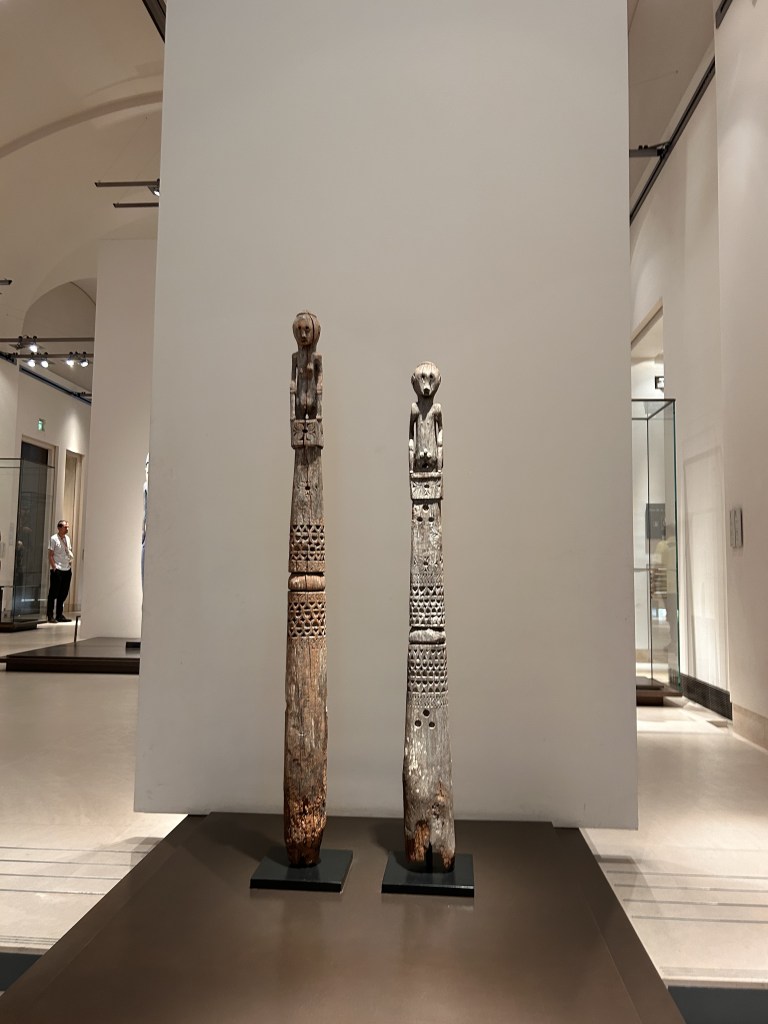
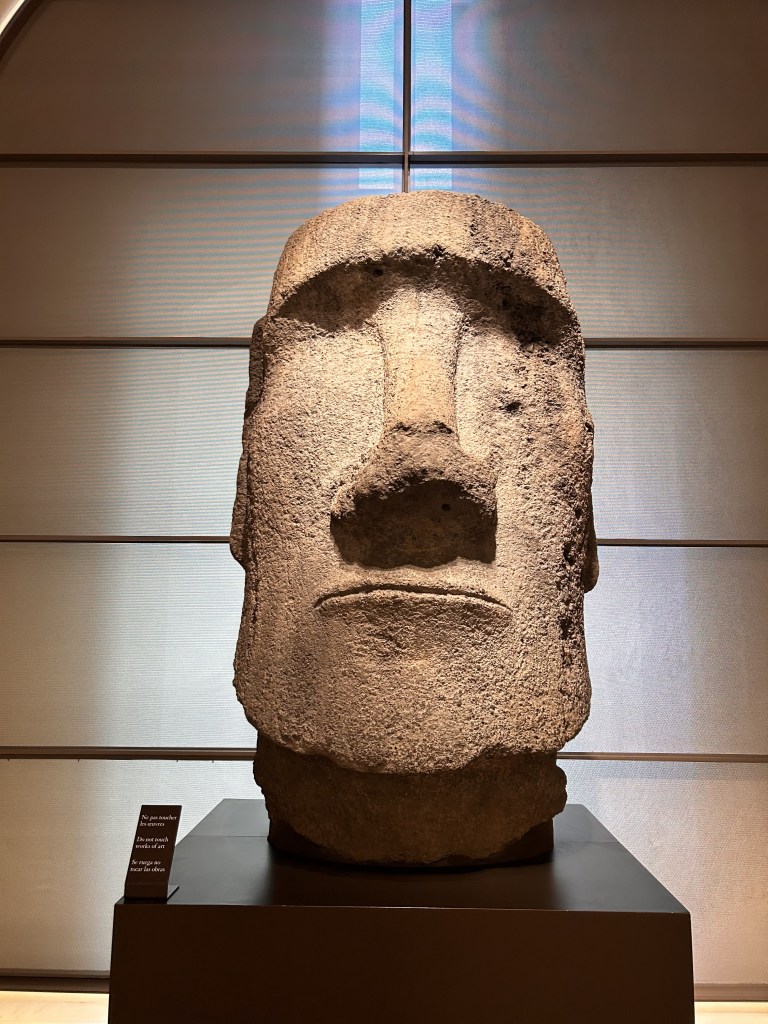
Overall, I thoroughly enjoyed those six hours taking in every object and statue that I passed. However, from this museum experience, I reflected upon the object collection of the Louvre Museum, and questioned whether there were other ways that the visitor experience could be improved, especially in terms with the Ancient Egyptian collection comprising of human remains and other potentially stolen loot like the African, Asian, and South American region.
 Revolutionary Cities