
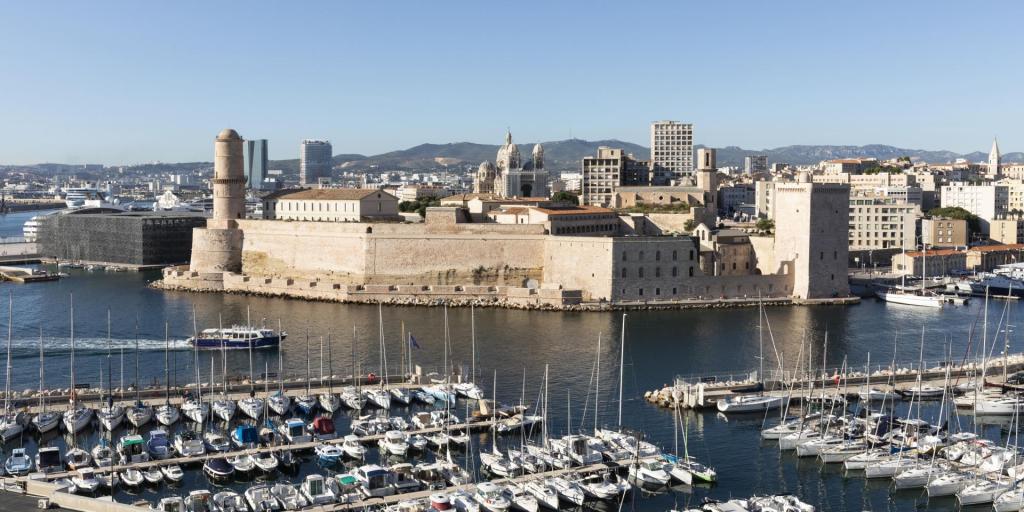
On our 2 day excursion to Marseille, I am pleasantly surprised to learn about the history of the city and the timeliness, especially after visiting the Immigration Museum in Paris to learn more about immigration and the country’s treatment of immigrants and foreigners. Visiting the Memorial of the Deportation Museum served as a somber and saddening yet informative experience in understanding the significance of the physical building and the symbol of commemoration of those who suffered in France during World War II.
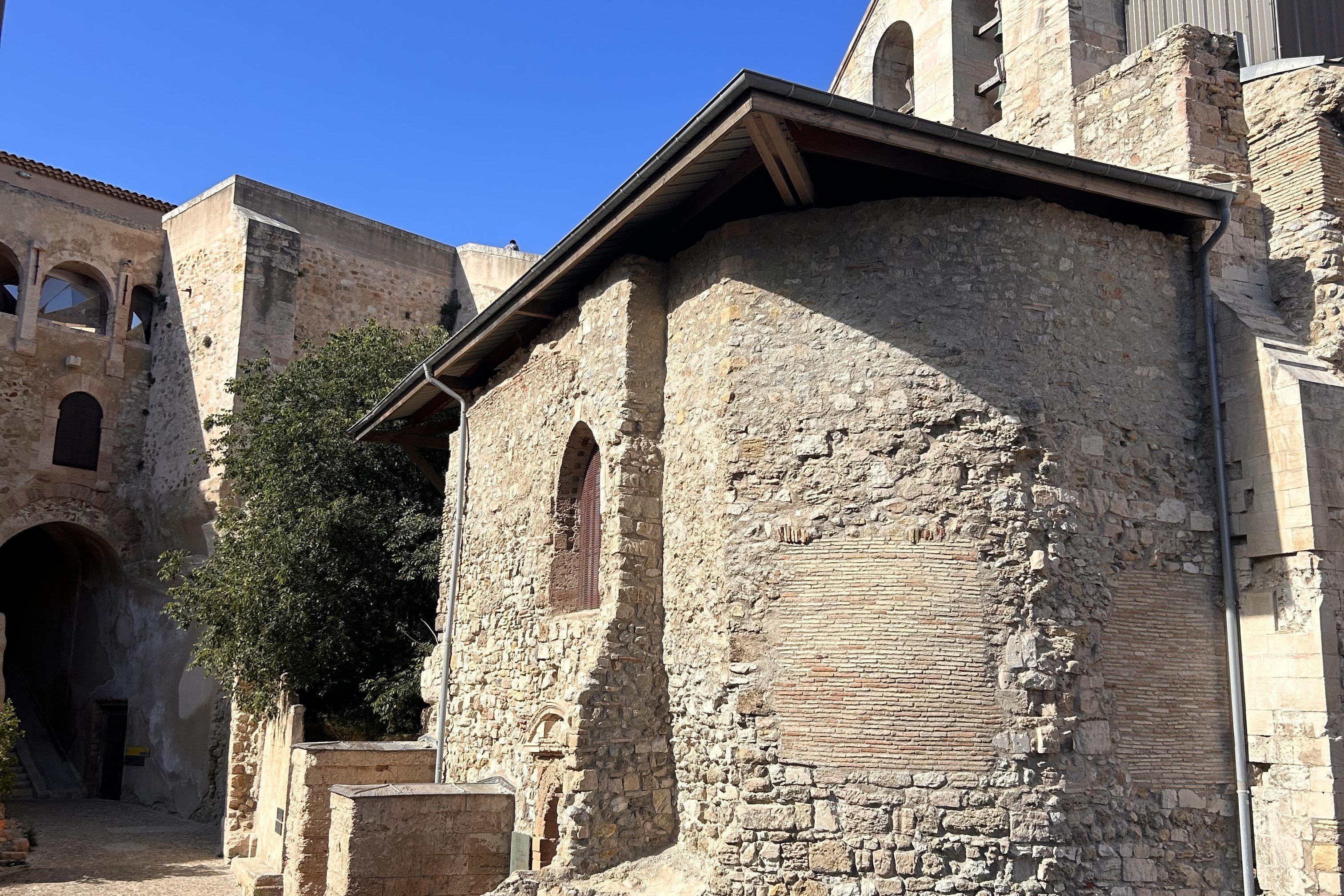
On the first floor of the memorial, I learned about the physical space and how it occupied people as an underground infirmary for the Nazi military. Reading the detailed description, I learned about the heavy fortification of the building with air filter systems, steel-slabbed ceilings, and three 360 degree tank turrets. It felt bewildering and sensitive to fully acknowledge that I was standing in what was an important military station that monitored movement of the port and contributed to the destruction of the Vieux-Port. Watching the short film about the history of Marseille also helped to provide more context, and I was shocked to learn that the French officials collaborated with the Germans in order to effectively deploy their strategies in “cleaning the city” and deporting many Jews to internment camps. It’s dumbfounding that had the French never complied or agreed to the Germans, then the latter would not have been effective in deporting so many French Jews and parts of the Vieux-Port in Marseille would never have been blown up. This didn’t really sit well with me, considering how France had so many tensions with its neighboring countries. But when it comes to expelling foreigners/immigrants, both had similar aspirations. Prior to visiting the museum as I scoured the port for potential spots to eat, I merely thought of the enchanting beauty of the port that is home to many residents and boats. Now, I realize that history was completely different than how it is now, and how it has dramatically affected Marseille to the present day.
I also learned about the 19 stories of those who were born Jewish and/or been repressed from the panels that the memorial also presented in an elaborate manner. I was very interested in how they decided to highlight specific individuals from the countless other stories and testimonials that are also waiting to share their perspectives. Reading every panel carefully and realizing that some of these people unfortunately lost their lives through terrible ways was extremely distressing for me. As I looked down to see a map of how a family traveled and that they were deported to so many destinations only to end up in Auschwitz, I felt my heart break a little. It made me realize that France has so many complexities and complications with immigration throughout its history in different regions of the country. Tying it back to the Immigration Museum we visited in Paris, I fully acknowledge that it has been a continuous back and forth with accepting and rejecting foreigners, and that even France had extreme political and religious tensions with its neighboring countries such as Italy and Germany.

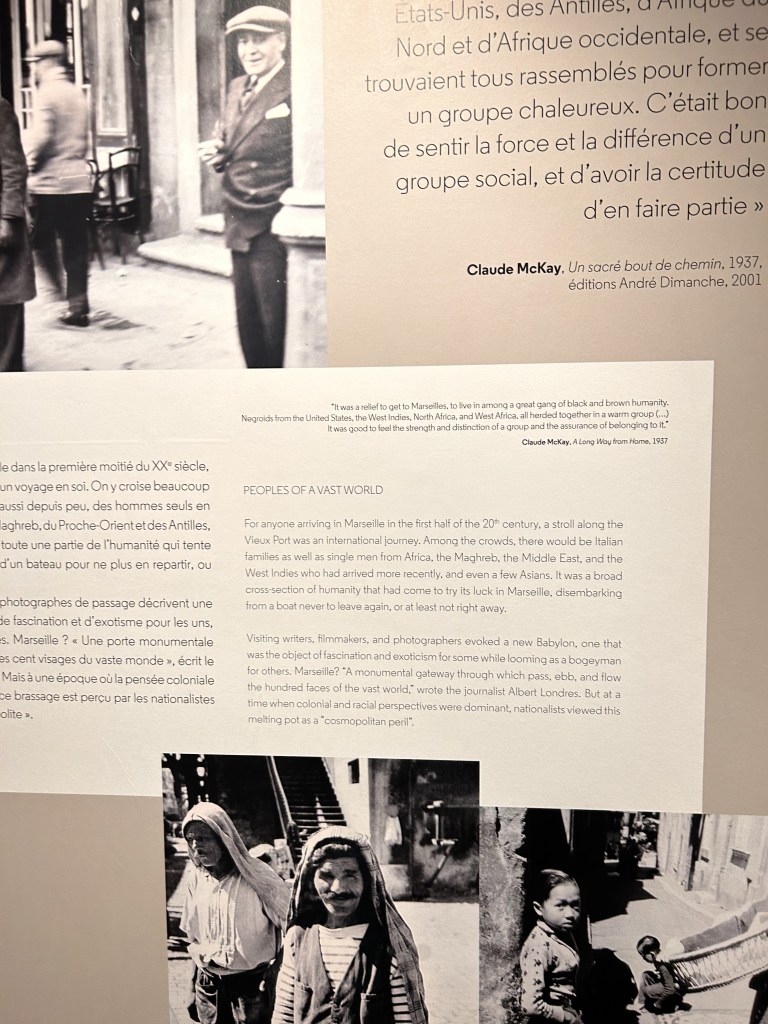
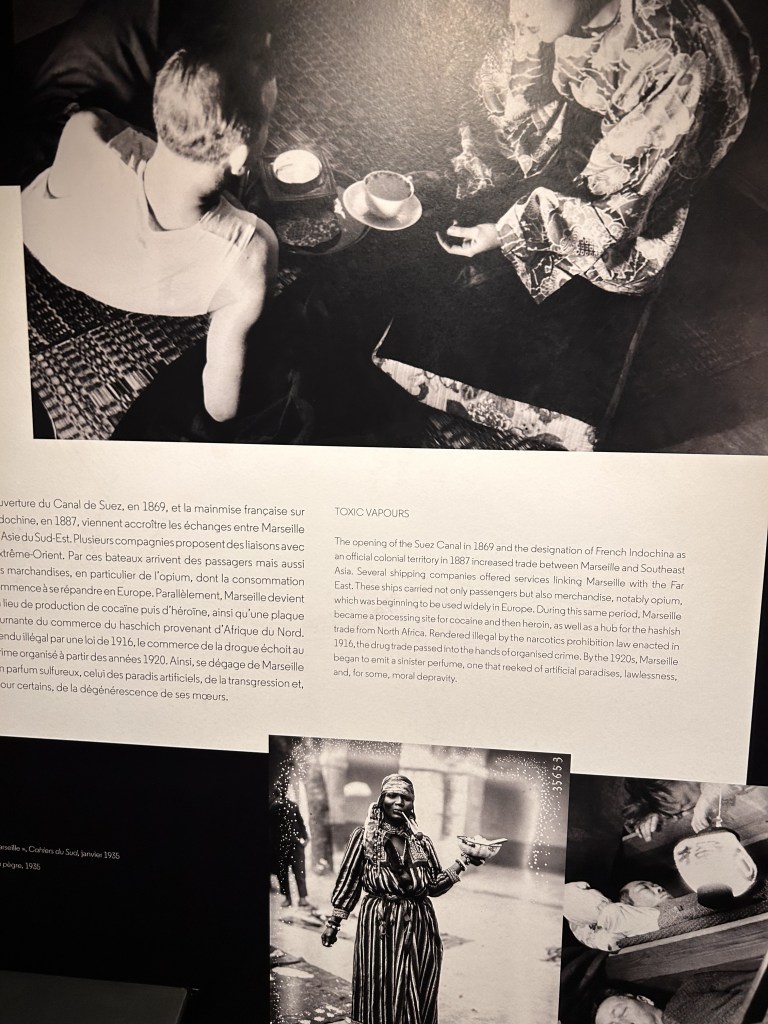
As I explored the second floor, I encountered the cultural diversity that encompassed Marseille. As a port city, it made sense that there were many cultural exchanges with Southern Europe along with the Middle East, Asia, and North Africa. However, this also did not come with entire peace: I was shocked to learn that the French did not particularly extend a warm welcome to the Italians during the mid-19th century. In what is known as the “Vêpres Marseillaises” that occurred in 1881, tensions soared because local employers preferred to hire immigrants because they were more willing to accept low wages, worked hard, and had few demands. This is reminiscent of historical and contemporary experiences of Asian immigrants in the USA. Starting with the massive influx of Chinese laborers in the mid 19th century that pursued low-wage jobs such as agriculture, mining, and building railroads, many labor tensions arose because they accepted lower wages. In both instances, it stigmatized immigration by adopting a negative connotation as an “invasion.” These dynamics, though occurring in different parts of the world, both have significant socioeconomic implications that regard wages and immigration policies. Because as with tensions, it comes with pejorative terms for immigrants, instigating xenophobia throughout the city by antagonizing a specific group of people.
The last floor held a short film that recounted the testimonials of those who survived. It was heart-wrenching to see them try and hold back tears in relaying their experiences, not necessarily to antagonize but merely to share their experiences and have their stories shared so history will not be repeated. As one man talked about how his youth and health was stolen and a picture of his younger self appeared on the screen, I lamented for his experience for never fully enjoying his years as a child. What caught my attention were the unnamed rooms next to the projected screens which displayed what looked like ashes/dirt contained inside wooden triangular containers. This is a symbol for memorializing those who have endured suffering during the World War II and the impact of the events that lead to their deaths.
From this experience, I believe the museum did an incredible job in transforming the physical building into a memorial to commemorate those who unjustly lost their lives and educating the public about the history of Marseille. While it was truly despairing to learn about the history of xenophobia and deportment of thousands of French Jews and those from other marginalized communities, it’s integral to learn about the past so that in the present and the future, there will be better advocacy to strive for the betterment of humankind. It also makes me reflect on just how much I know about the history of xenophobia, immigration policies, and other related issues in my own hometown New York City. Multiple questions arose that I aspire to answer: How have these events that occurred in Europe also appeared in the United States? How did these specific events impact immigration to the states, particularly in New York City? Where particularly did many of these marginalized communities situate themselves in, and how have they memorialized their history, if at all? This has inspired me to continuously research and learn more about these issues that didn’t just occur in the past.
 Revolutionary Cities