
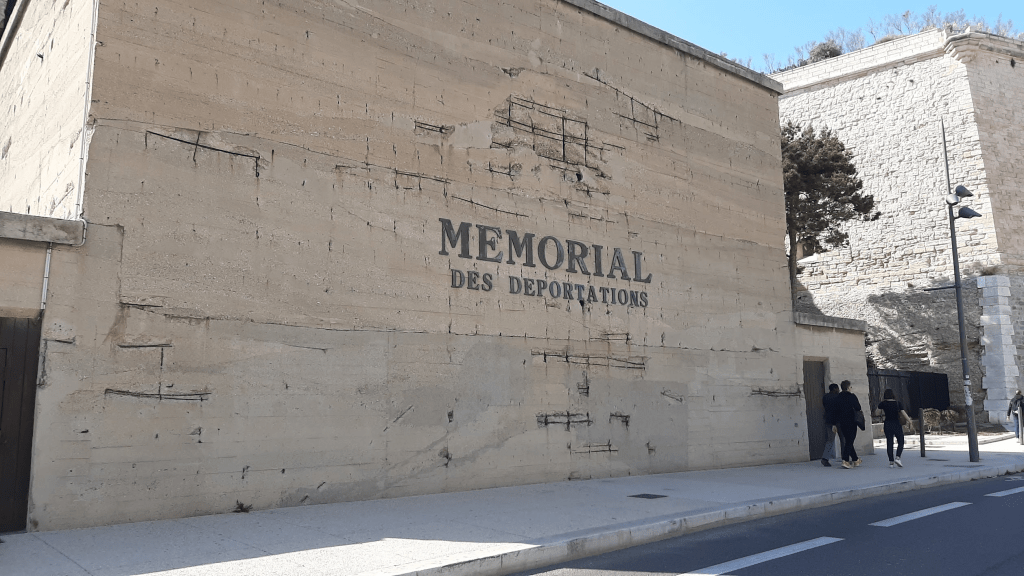
During our European night at the museum, I was able to visit the Mémorial des Déportations de la Ville de Marseille. The museum is dedicated to preserving the memory of the deportation of Jews and other victims of Nazi persecution from Marseille during World War II. Its purpose is to educate visitors about the atrocities committed during the Holocaust and the experiences of those who were deported.
I was initially intrigued to visit the museum due to its focus on emigration and deportation. The various sociological behaviors that people exhibit in response to wartime phenomena are fascinating to analyze, and it is essential to recognize the individuals who persevered through such destructive times.
The museum had a total of three levels. The exhibit on the first floor introduced us to the building’s original purpose as a blockhouse built in 1943, serving as a former shelter-infirmary for the German Kriegsmarine. The memorial was established as a place for reflection and the preservation of the memory of the Occupation in Marseille, honoring the victims and resistance fighters against Nazism and the Vichy regime. Additionally, the first floor included numerous stories and testimonies from individuals of all genders and ages who endured the harsh conditions imposed by the war at that time.
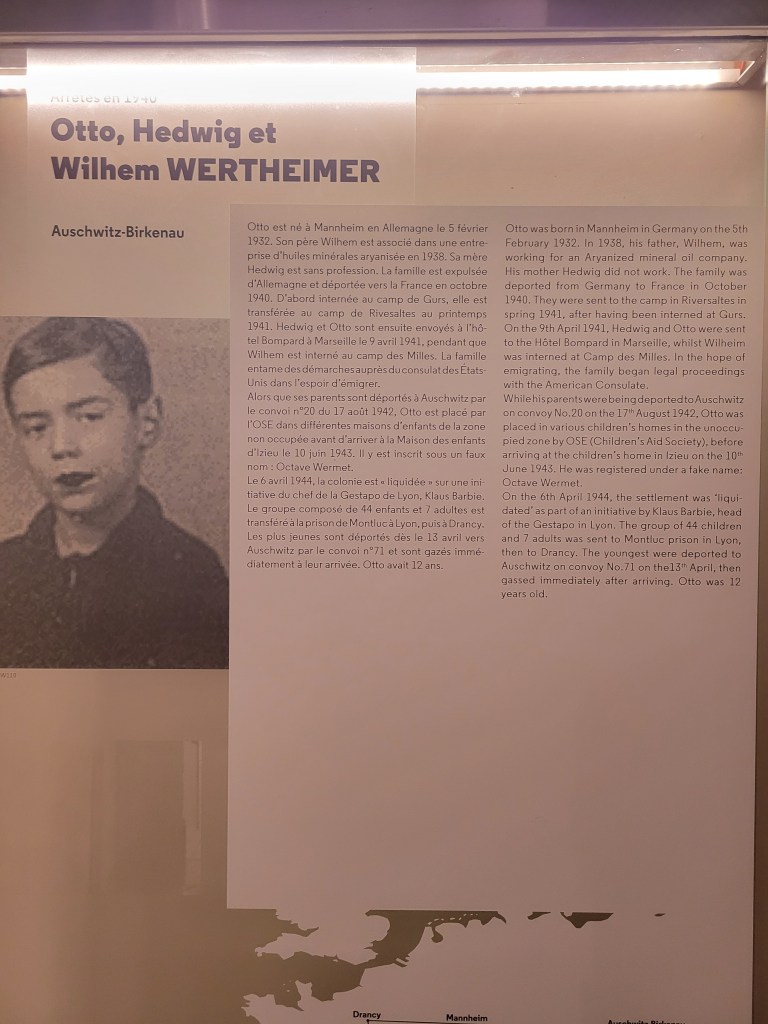
It was not only heartbreaking to read all the stories of people who were deported from their countries and separated from their families, but I also felt a sense of frustration toward those who initiated these painful incidents. Many children were forcibly separated from their parents, left in unprotected environments.
The second floor of the museum presented a combination of historical facts about Marseille and depicted what the city was like during the German occupation. I was mesmerized to discover that almost more than half of the area of the old port was demolished for complete reconstruction during the World War II era. The Old Port was dynamited in a collaborative effort between the Nazis and the Vichy regime. The French police expelled 30,000 people from the neighborhood before it was dynamited, and hundreds of Jews were deported to concentration camps in the process.
The German Nazis took away these people’s homes and also stripped them of their nationality. The marginalized groups became stateless, lacking a national identity or community to celebrate their culture. The films shown in the museum effectively presented these aspects to visitors through documentaries.
Finally, on the third floor of the museum was the theater projecting the documentary of testimonies. The concentration camp survivors appeared in the video, each explaining their past experiences and the treatment they received afterward. Both men and women of old ages talked about how people refused to believe their experiences in the concentration camps and how their children and the younger generation refused to acknowledge their painful narratives.
I was able to truly delve into the perspective of these survivors as the documentary incorporated the historical facts of the death camps under Nazi control. The sorrow, anger, trauma, and helplessness were well conveyed to the audience.
The Museum of Deportation plays a paramount role in preserving the memory of the Holocaust and ensuring that the experiences of the victims are never forgotten. By the end of the visit, I was fully educated about what happened in Marseille and learned to appreciate the promotion of human rights, tolerance, and peace.
 Revolutionary Cities