

MUHBA Oliva Artés Museu Historia de Barcelona showcases the industrial, immigration, and demographic growth of Barcelona. The museum helped me understand the city from both social and historical perspectives. It goes beyond mere exhibits by providing in-depth information about Barcelona’s history, connecting it to significant developmental milestones. As you walk through the museum, you learn about the industrial and technological revolutions that shaped the city, as well as the social struggles of the Poblenou residents who fought to bring services, public facilities, and a better quality of life to their neighborhood.
Entering the 19th century, rapid advancements in technology and innovation emerged worldwide. Tall buildings were constructed, automobiles were produced on assembly lines, and textile companies streamlined fabric production. Industrialization spurred exponential economic growth and technological change, creating new opportunities in the workforce. It also improved the quality of life by making goods cheaper and more widely available.
Industrialization dramatically changed everyday life for the human population. Industrialization led to the emergence of new social classes, creating more rigid class structures and widening the gap between the rich and the poor. The elite class, including business owners, encouraged this hierarchical rigidity in social divisions as it benefited them with great wealth and power.
The main reason achieving socioeconomic equality is so difficult is because of the resistance from those in higher society. They refuse to change the environment that grants them their privileges. They strive to maintain the status quo, keeping the poor poor and the rich rich. By discouraging education for the next generation of the poor and controlling wages and lifestyles, they make it extremely difficult for individuals to improve their financial status.
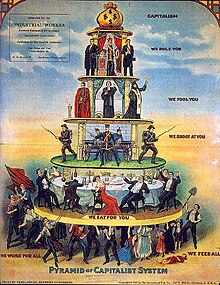
Industrialization brings about three distinct social classes: the working class, the middle class, and the elite. So, is this occurrence necessarily bad? From the perspective of pursuing happiness and promoting the well-being of the majority, the answer is yes. However, from the perspective of maintaining social order and economic stability, it is not necessarily negative.
As mentioned earlier, creating divisions in society leads to significant economic disparities. The wealthy have access to better resources, education, and healthcare, while the poor struggle to meet basic needs. Rigid social structures also limit social mobility, making it difficult for individuals from lower classes to improve their socioeconomic status. Additionally, lower classes may be exploited by those in higher classes, leading to unfair labor practices and poor working conditions. This social division not only limits the opportunities available to people of the lower class but also prevents these families from fully enjoying the stable and secure life that everyone wishes to have.
In the perspective of maintaining social order and economic well-being, however, social divisions provide a sense of structure and order, organizing society by helping to allocate roles and responsibilities. Additionally, they offer incentives for innovation, as wealthier classes have the resources to invest in businesses and innovations, thereby driving economic growth. Moreover, the demand for goods and services by higher classes can create jobs and stimulate the economy.
Industrialization indeed solidifies and deepens social divisions. While these divisions breed significant inequalities and social tensions, they also provide structure and momentum for economic growth. Balancing the benefits and drawbacks of social class systems remains an ongoing challenge and subject of debate for societies striving to foster fairness and opportunity for all their members.
Through our brief visit to the Museu Historia de Barcelona and class discussion, I was able to explore the relationship between industrialization and social class. The elaborate discussion with my classmates also increased my awareness of the ongoing issues regarding inequalities. Overall, it was a successful interactive and collaborative experience!
 Revolutionary Cities