
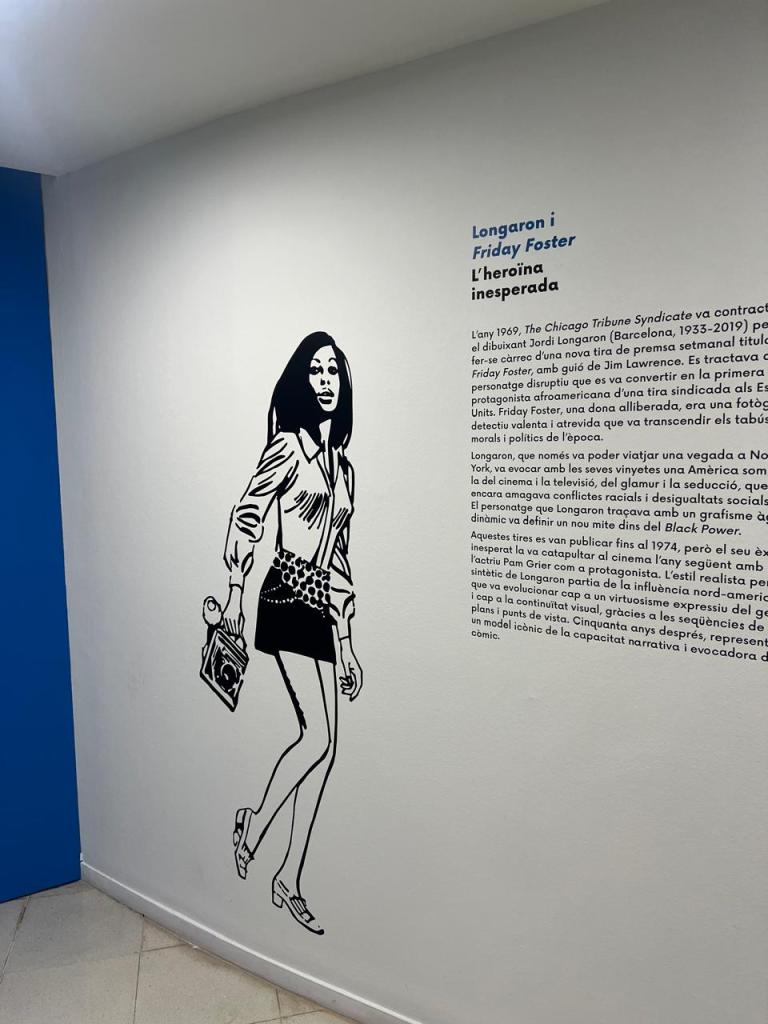
Last weekend, I had the incredible opportunity to visit the Museu Nacional d’Art de Catalunya in Barcelona, where I immersed myself in the world of Jorge Longarón, the Spanish cartoonist whose work left an indelible mark on the Black community worldwide. The exhibit, focused on his renowned comic strip Friday Foster, was both enlightening and moving, offering a glimpse into the powerful intersection of art, culture, and social change.
The Genius Behind the Pen: Jorge Longarón
Jorge Longarón, a Barcelona native, began his artistic journey in the 1940s. Known for his impeccable line work and dynamic compositions, Longarón brought a unique European flair to the American comic scene. But it was his work on Friday Foster that truly cemented his legacy. Created in collaboration with writer Jim Lawrence, Friday Foster debuted in 1970, breaking new ground as the first mainstream comic strip to feature a Black female protagonist.
Friday Foster: A Trailblazer in Comics

Friday Foster follows the adventures of its titular character, a former fashion model turned photo-journalist, navigating the glamorous yet treacherous world of New York City. The character of Friday Foster was not just a fictional creation but a symbol of empowerment and representation for the Black community. At a time when the media landscape was overwhelmingly white, Friday Foster stood out as a beacon of diversity, breaking stereotypes and offering a multifaceted portrayal of a Black woman’s life.
Impact on the Black Community
For the Black community around the world, Friday Foster was more than just a comic strip; it was a cultural milestone. The strip provided visibility and representation during a period when such portrayals were scarce. It showed a Black woman in a powerful, professional role, which was revolutionary in the early 1970s. This representation helped to challenge and change perceptions, offering a new narrative that celebrated Black beauty, intelligence, and strength.
Critical Analysis
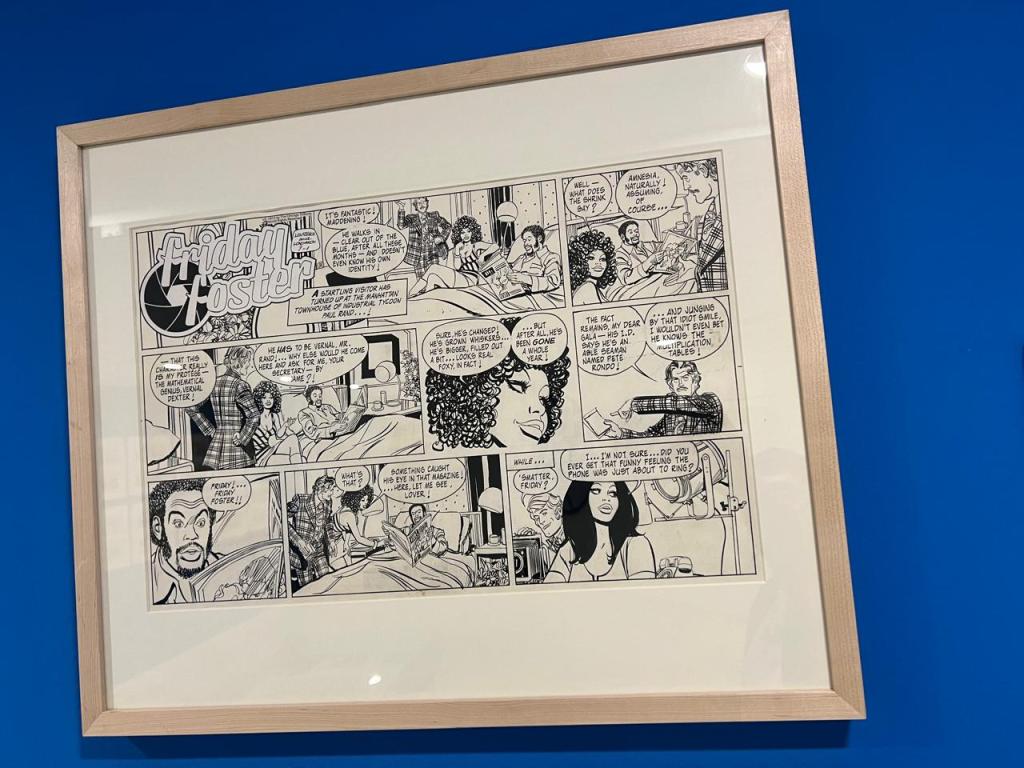
I found Longarón’s artwork in Friday Foster to have incredible intricate details and expressive character designs. His ability to capture the essence of New York City, from its bustling streets to its high-fashion runways, added a layer of authenticity and vibrancy to the strip. The characters were drawn with such care and nuance that they felt real, relatable, and compelling.
However, while Friday Foster was groundbreaking, it was not without its critiques. Traversing search results on Google, I found multiple critics arguing that the strip, written by a white male writer and drawn by a Spanish artist, occasionally leaned on stereotypes and lacked the deeper cultural insights that could have been provided by Black creators. Despite these criticisms, Friday Foster remains a significant work for its pioneering role in comic history and its positive impact on representation.
Conclusion
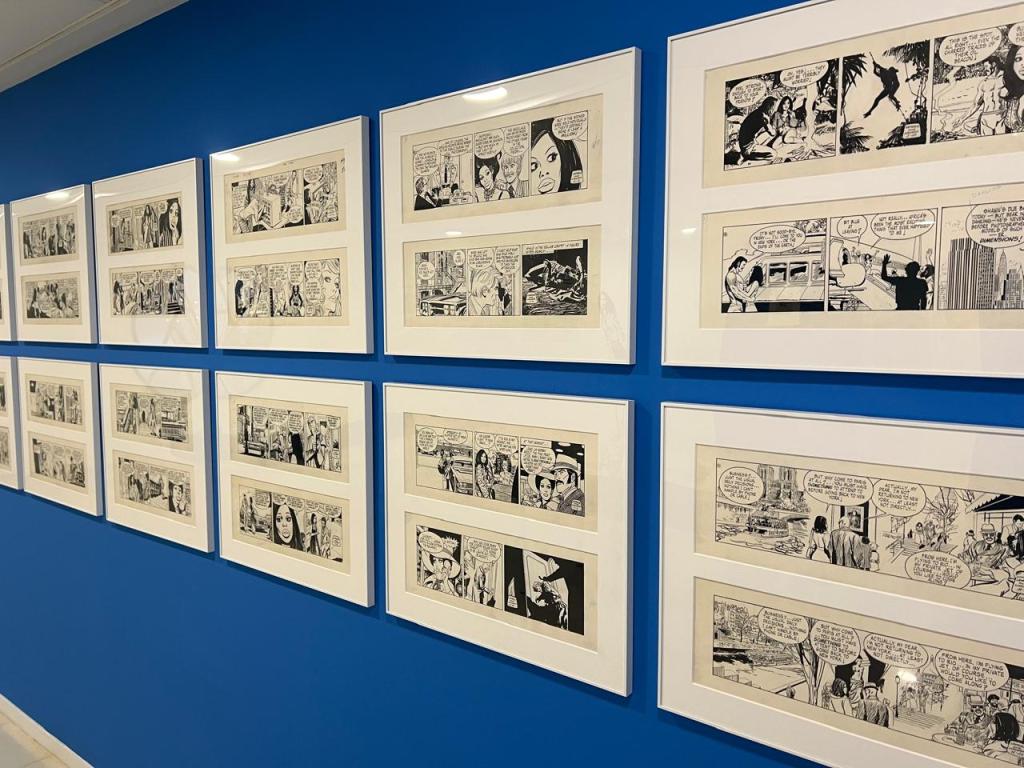
Walking through the exhibit, I was struck by the meticulous curation that showcased Longarón’s original sketches, inked pages, and full-color strips. Each piece told a story, not just of Friday Foster’s adventures, but of the artist’s dedication to his craft and his contribution to a more inclusive media landscape. Interactive displays allowed us to see the evolution of Longarón’s art, from rough drafts to final prints, highlighting his creative process.
Seeing the Friday Foster exhibit at the Museu Nacional d’Art de Catalunya was an eye-opening experience that deepened my appreciation for Jorge Longarón’s work and its significance. It reminded me of the power of art to break barriers and foster understanding. Longarón’s contribution to comics is a testament to the importance of diversity in media, and I’m sure his legacy continues to inspire artists and readers alike.
For a student, this exhibit was more than just a glimpse into the past; it was a call to action. It encouraged me to think critically about representation in all forms of media and to support stories that reflect the true diversity of our world. Jorge Longarón’s Friday Foster is a shining example of how art can change the narrative and pave the way for a more inclusive future.
 Revolutionary Cities