
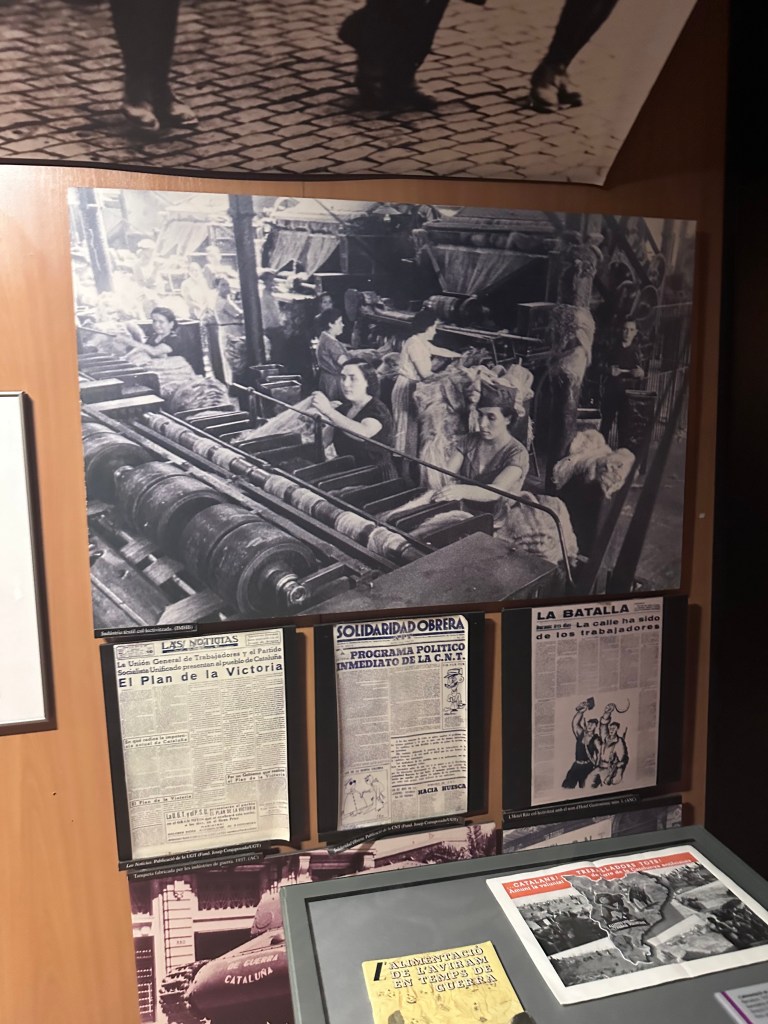
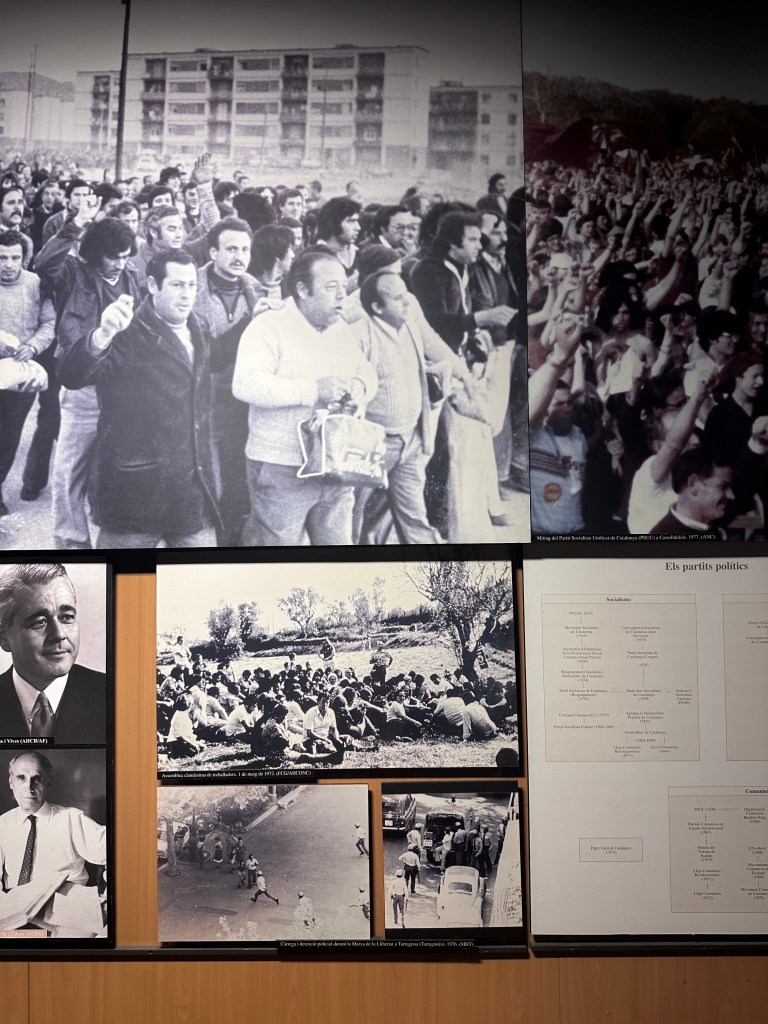
During the Civil War in Barcelona, immigration was at its lowest, but as the automotive and industrial industries expanded, they attracted immigrants from all over Spain due to job opportunities. This influx encouraged people to become more engaged in their communities, leading immigrants to embrace the Catalonian language and culture. Staying right in the city, it is intriguing how many people from not only Spain but also different countries are here. These individuals have adopted the Catalonian language and culture, which makes me question why it is so difficult for Catalonia to be considered its own separate state if millions of people identify with the language and culture.
During our museum visit on Wednesday, there was a lot of insightful information on what it is like to immigrate to a new country as well as the impacts of industrialization on the city as a whole. During our discussion, we debated whether industrialization is good or bad for the surrounding people, and in my opinion, I would say overall industrialization is beneficial for the economy and people living in the area as it provides stable jobs and resources for Barcelona that it would not have without industrialization. However, like anything, there is always a downside as industrialization also causes income disparities since those in power become significantly wealthier than the ones performing the physical labor. The effects of this can still be seen today by the poverty rates in Barcelona, specifically in the Las Ramblas area where we stayed, where there was a large number of homeless people sleeping in corners and on park benches. Not to mention the number of people concentrated in this one part of Barcelona; I am not sure if it is because of the number of tourists or if it is actual residents living in this area, but the density is unmatched compared to Gracia or other neighborhoods. Overall, there is a prevalent connection between the income disparities between those who benefit from the effects of industrialization and those who do not. My question is how areas like Las Ramblas will trend in the future and if industrialization or gentrification will gradually creep back into this area.
 Revolutionary Cities