
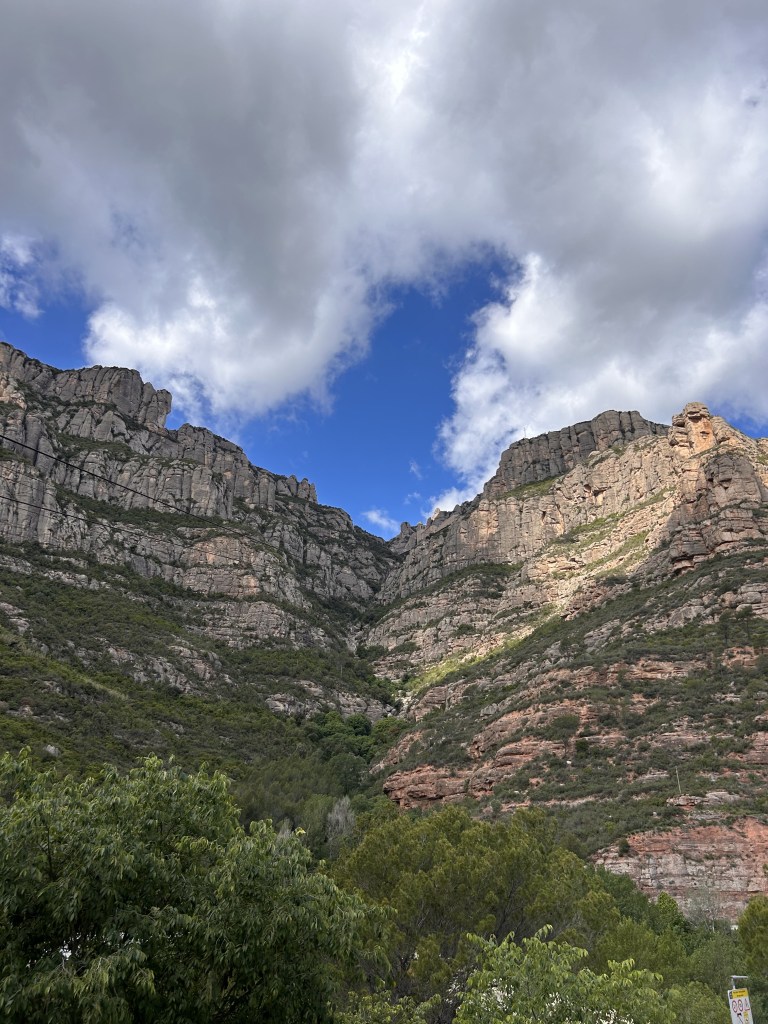
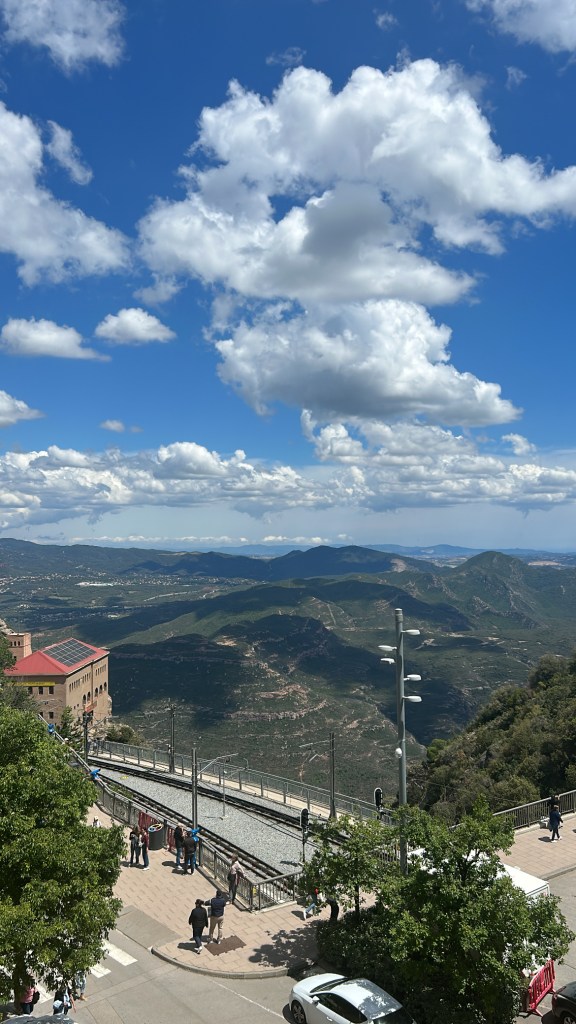
Located next to the Montserrat Monastery perched on top of steep mountains, the Montserrat Museum offers a splendid display of its unique collections, ranging from archaeological artifacts originating in Egypt and Mesopotamia to more modern paintings by the famous painters Picasso and Dali, and even featuring avant-garde artworks. It was especially fascinating to explore the unique interplay of the depiction of motherhood through art and spirituality through walking around the exhibits and immersing myself in the time period of different artworks, especially when the museum is located in such an breathtaking environment.
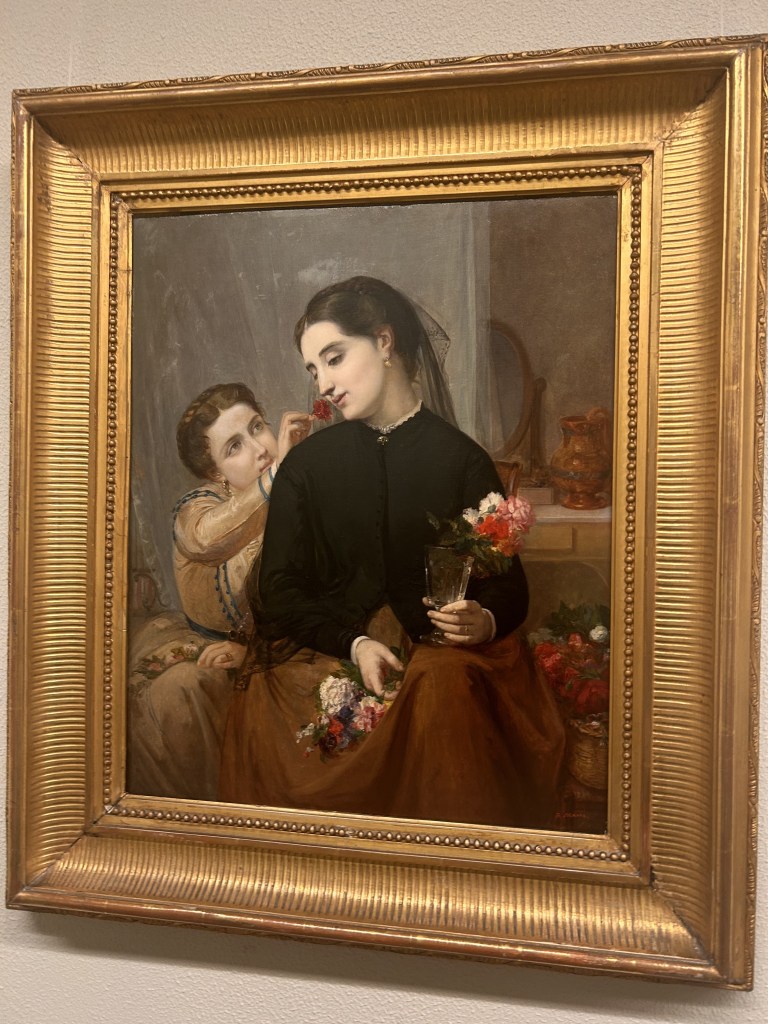
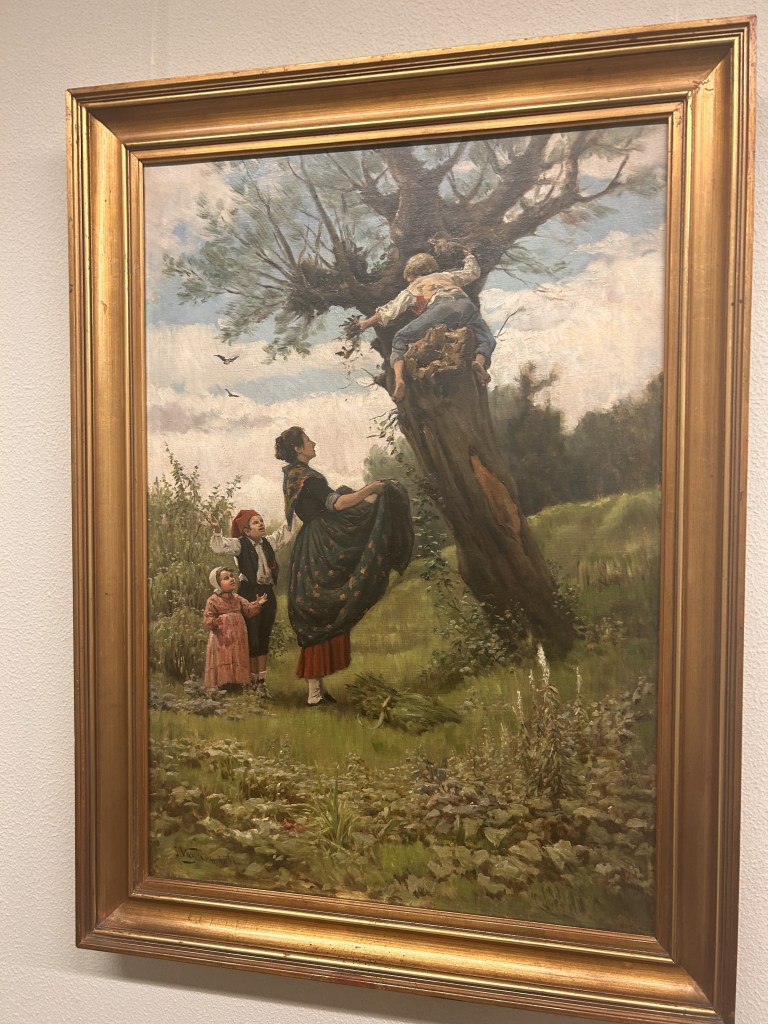
As I followed the chronological path of the museum, I quickly observed a common theme of motherhood appearing in several of the displayed paintings. The left painting below features a mother tending to her daughter by enhancing her beauty as she daintily brings a flower to her cheek. I felt this painting to be quite intimate between the relationship of mother and daughter. Similarly, on the right, we see a mother venturing in the forest with her three children. Motherhood is heavily represented in artworks throughout history, which symbolizes fertility, nurturing, and continuity of heritage. Acknowledging the time in which these artworks were painted, the roles of women were associated closely with family care and domestic life. What were the intentions of the artists? Were they to reinforce the ideal of the nurturing role of women? And if so, how effective were they in fortifying societal norms? It also makes me ponder on the values of Catalonian family life: How is the mother revered in their household? In what ways is she represented through other mediums? Such intimate portrayals illustrate the revered mother figure as a core of family life and social stability. In moments like these, I’m offered a fleeting glimpse of the tender, private moments that I often share with my mother, whom I miss dearly.
Venturing into the exhibition devoted to showcasing the Iconography of Our Lady of Montserrat and the way the Virgin has been represented in art over the centuries, I wanted to capture the meticulous detail of Agusti Remon’s “Our Lady of Montserrat” and an unknown artist’s “Our Lady of Montserrat in red velvet chair” depicted below. The Virgin is a venerated figure in Catalan spirituality and is heavily correlated with motherhood and protection. The fact that the museum has a sole exhibit dedicated to Our Lady of Montserrat, I am certain that this emphasis on motherhood reflects the Catalan religious devotion and highlights the Virgin’s role not just as the Mother of God but as a symbol for maternity. And it’s certainly intriguing that both artists decided to incorporate similar artistic elements into their artworks, including the poses of the mother and child, the Virgin Mary holding a golden pot of blooming flowers, and mountains in the background. These mountains may symbolize sacredness, especially since the Montserrat Museums houses an ancient monastery. Upon further analyzing these two artworks, I question the artistic choice: Could these mountains also serve to act like a throne for the Lady of Montserrat? And from other museums that we have visited thus far, I realize that art can be an incredible medium for expressing faith and reinforcing spiritual notions and ideals for the people during the time.
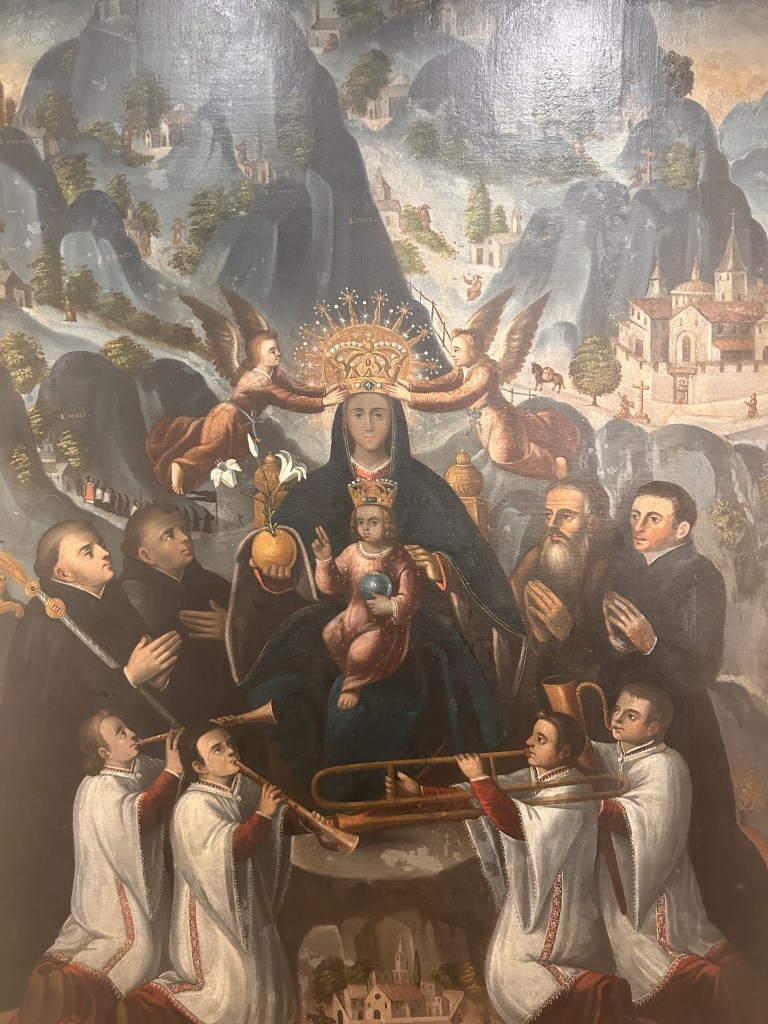

Going down the stairs towards the lower level, I entered a velvet-decorated room separated from the rest of the exhibit adorned with religious and spiritual iconography and depictions of the Lady of Montserrat. Everywhere I turned, there seemed to be the same universal depiction of the Virgin Mary holding a Christ child and looking up with an endearing expression. These not only serve as devotional objects but also as models of idealized motherhood. Even for me, looking at the countless iconography, I felt emotionally compelled and admittedly a little unsettling. Of course, as artworks can evoke strong emotional responses from viewers, tapping into the universal feelings of love and protection from their familial bonds. And once again, this leads me to question the purpose and intentions of the museum curators for this particular exhibit: What emotions did they want to evoke from the typical visitor as they enter this space? And as someone who is non-religious, I wonder how someone who is devoutly religious might feel differently than I did as they also wander into the room. Overall, it seems that the artists in the Montserrat collection use the universal theme of motherhood to explore themes of love, sacrifice, and virtue.

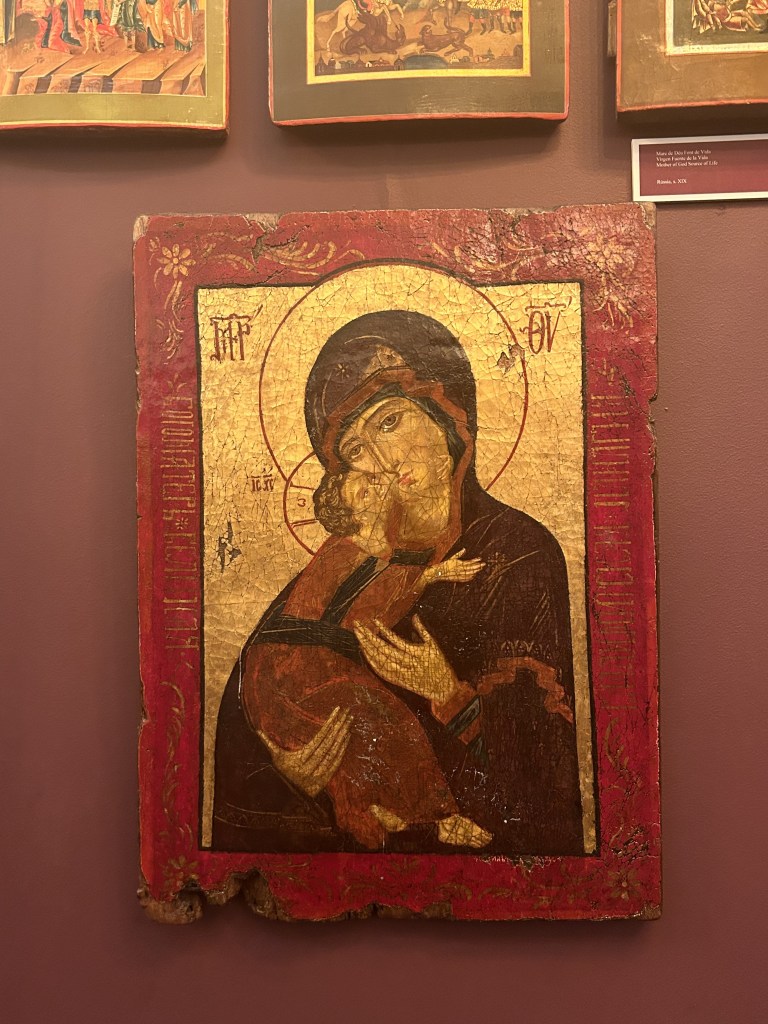

Overall, I left the Montserrat Museum with a good impression, leaving me to my thoughts on their depiction of motherhood through the universal symbol of the Virgin Mary – specifically Our Lady of Montserrat in Catalonia, Spain. This theme likely serves multiple purposes, from reflecting societal and cultural values during their time period and reinforcing religious devotion, to exploring and showcasing the universal human experience of protection and familial bonds. Could there have been a more effective way in speaking to different aspects of human life and spiritual contemplation? Perhaps, but I personally left with a more emotional understanding of Catalonian spirituality through art at the Montserrat Museum.
 Revolutionary Cities