
The Museo Picasso is truly an amazing experience. The artwork, in all different shapes and sizes, was all magnificent. The sketches and paintings let the viewer see how Picasso’s mind worked when creating a piece. Pablo Picasso lived in Barcelona for some time in his life, reflecting in his artwork. He painted pictures of beach and city scenes in Barcelona, allowing viewers at this museum to connect the place to the artwork. Picasso was an amazing artist however he was also a political activist in Spain. Picasso was involved within the communist party, being very involved in anti-fascist movements. In what ways was Picasso an advocate through his art?
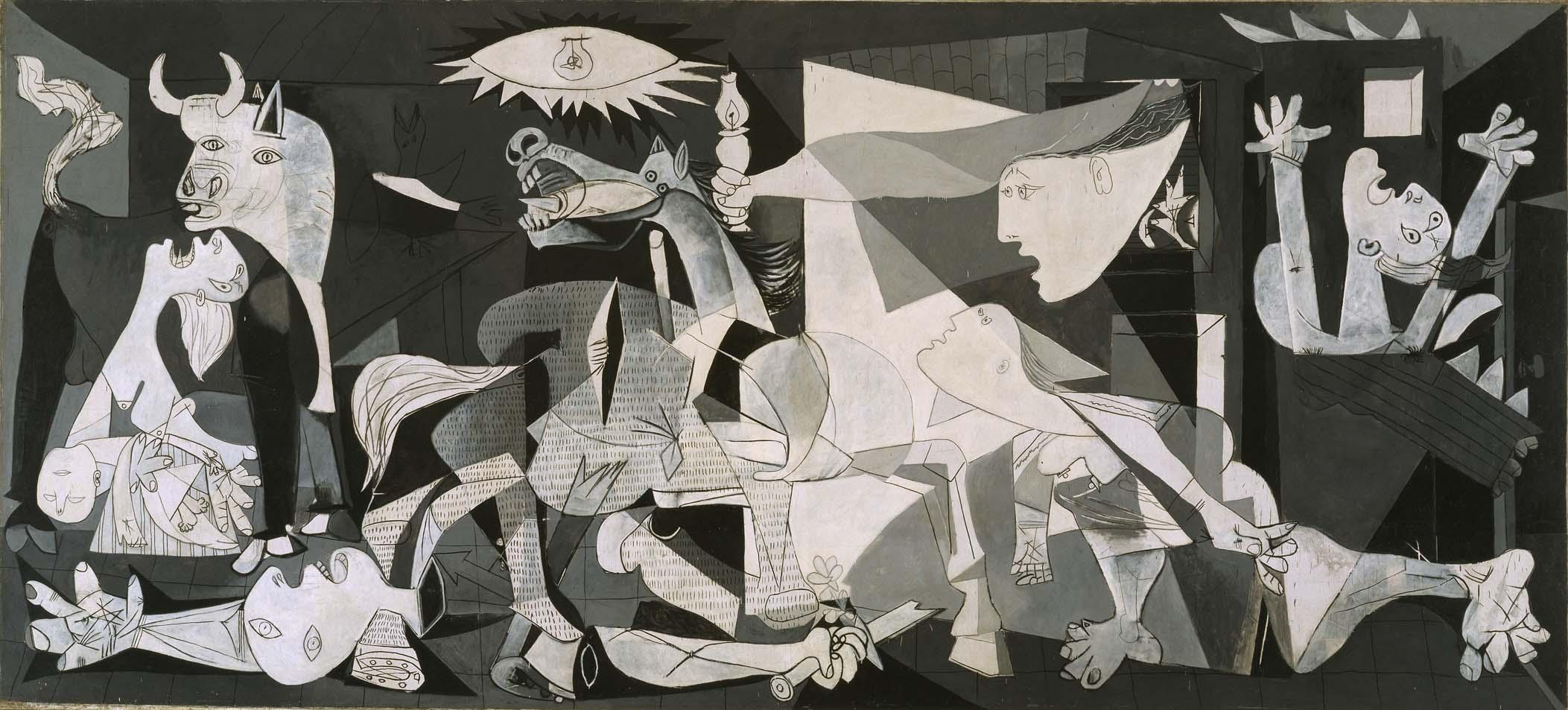
In his famous work, “Guernica,” Picasso is a symbol for the anti-war movement, made after the bombing of Guernica by Nazi and Italian forces during the Spanish Civil War in 1937. As a cubist and large piece of artwork, Picasso intentionally used only a monochromatic palette to emphasize the dark and dreary arena that war creates. Additionally, Picasso uses symbols in this piece to signify certain themes and ideas. The horse in this work is wounded, screaming from the agony of this injury. It has a contorted body formed from jagged lines. The injured horse is a symbol for the people of Guernica, suffering from the contempt of war. The lightbulb above the horse is shaped like an eye, signifying that God himself is watching over the actions of the war. Some also argue that this lightbulb symbolizes the enlightened, overall emphasizing the idea that knowledge is more powerful than violence.
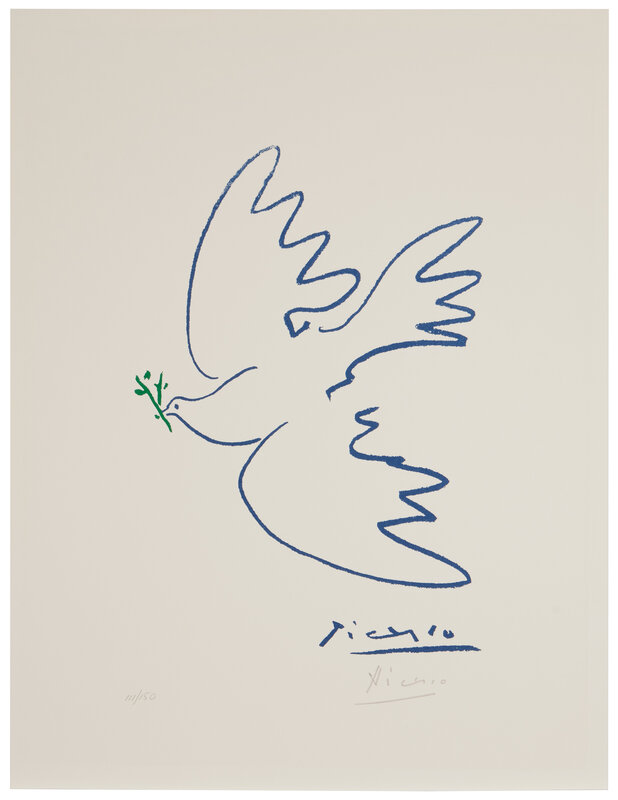
Over his career, Picasso painted many turtle doves, which are widely known to symbolize peace over hatred. He created the “Dove of Peace” for the 1949 Paris Peace Conference, leading many organizations to use the dove to depict the ideals of love and peace. Picasso’s depiction of the dove is simple yet powerful in the message it evokes. The dove flies holding an olive branch between its beak, signifying that peace spreading throughout the world population. The “Dove of Peace” remains a symbol of peace and reconciliation. It continues to be used in many different contexts, from international organizations like the UN to grassroots movements advocating for social justice and peace. Picasso’s commitment to peace and anti-war activism was a core belief instilled within his artistic and political aspirations.
Pablo Picasso continues to be a figurehead for peace and political activism. Seeing his work in person only further instilled this belief in me. Through his artistic means, Picasso was able to have his artwork and symbols recognized worldwide. Picasso’s works will be remembered as artistic masterpieces, forever communicating his beliefs and ideals.
 Revolutionary Cities