
Throughout my visit at the Museu Nacional D’Art De Catalunya, I noticed that many visitors spent more time looking at featured propaganda art, or art that was used in propaganda than looking at pieces that called for freedom or liberty. Initially, I was confused, but I found myself doing the same thing. I mean why was I paying more attention to material I knew to be false, hateful, and incited violence against innocent people? This question is threefold, and it will be answered by its classification/type of propaganda. Also, I was struggling to find a balance of education and the spreading of propaganda in some of the exhibits, and attempting to reconcile with this dynamic made me realize that in some situations, displaying labeled propaganda is still extremely harmful.
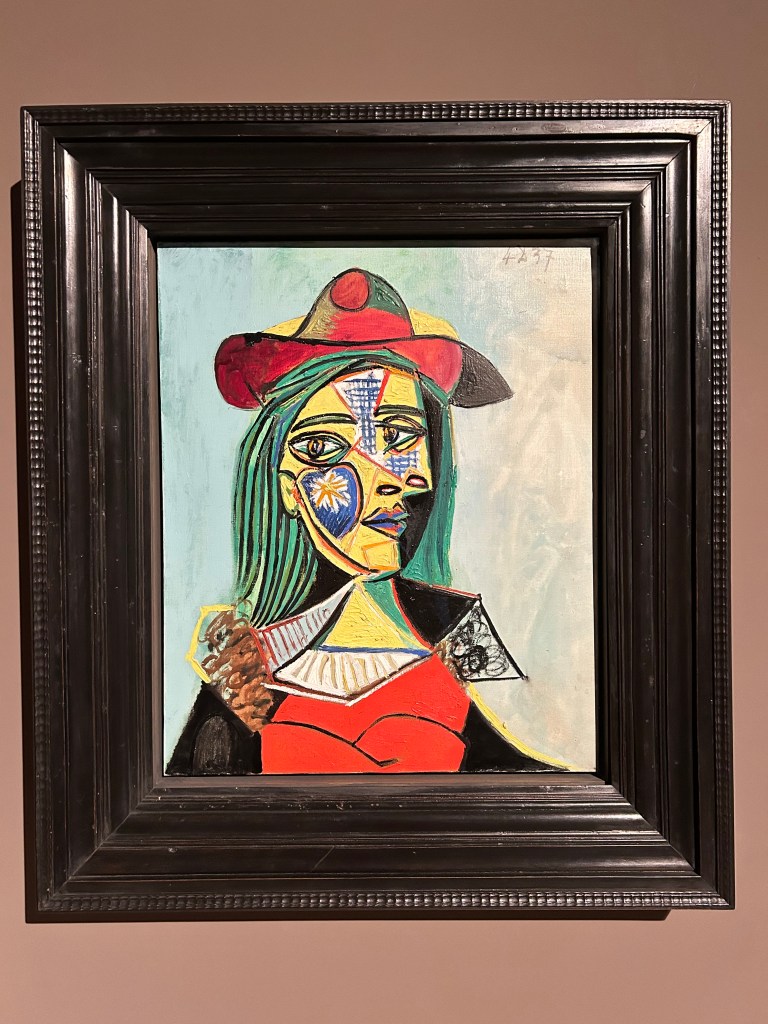
To start off, the propaganda posters used from the Franco (Caudillo) regime to legitimatize its reign. During the 1937 International Exhibition in Paris, the Caudillo displayed art from popular artists like Picasso. One of Picasso’s most iconic paintings (shown below) was used in the propaganda scheme. Finding out why I was so drawn to this propaganda was simple. It was because the regime used such an iconic piece of art as their own to attempt to justify its “republican” form of government.
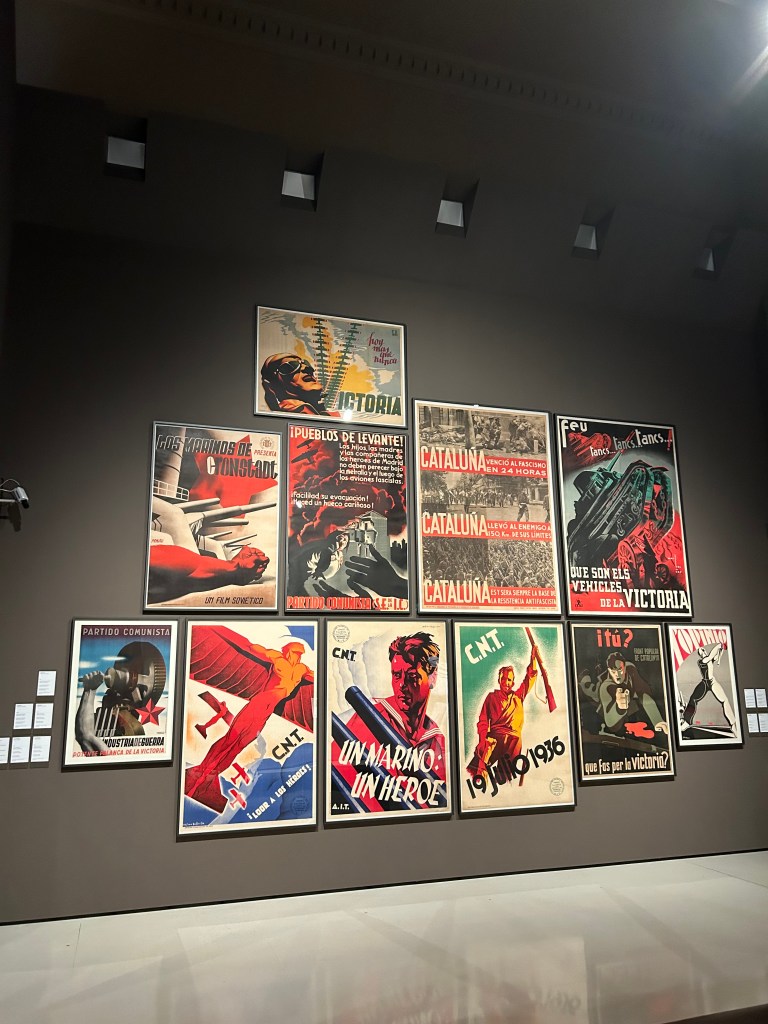
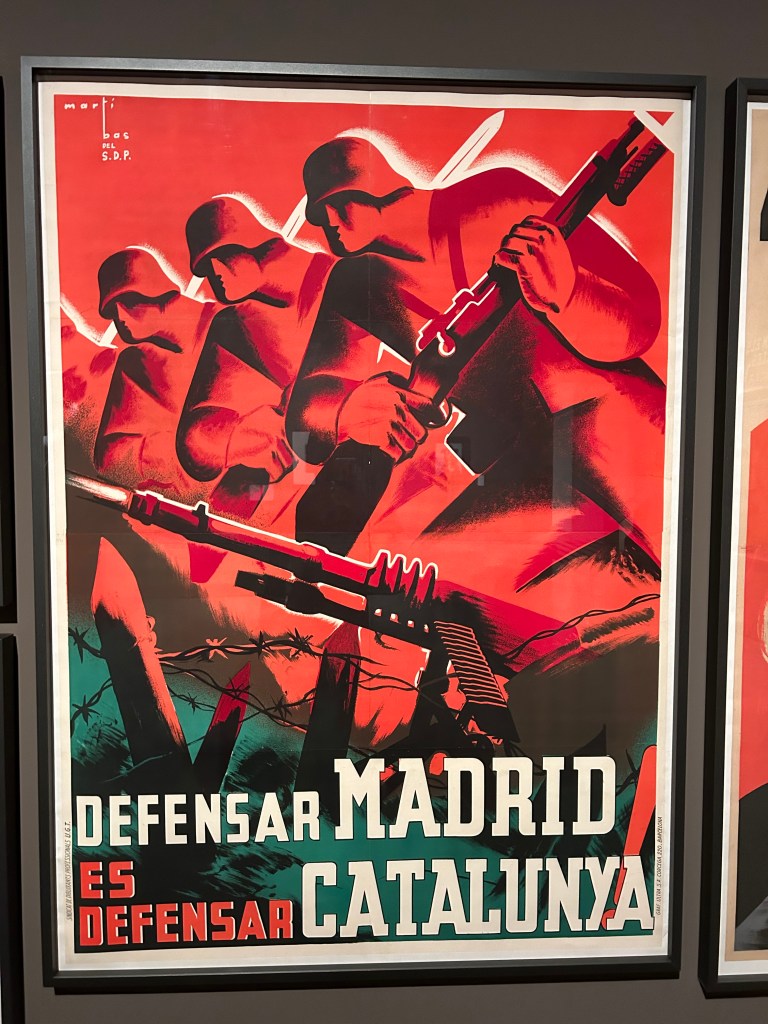
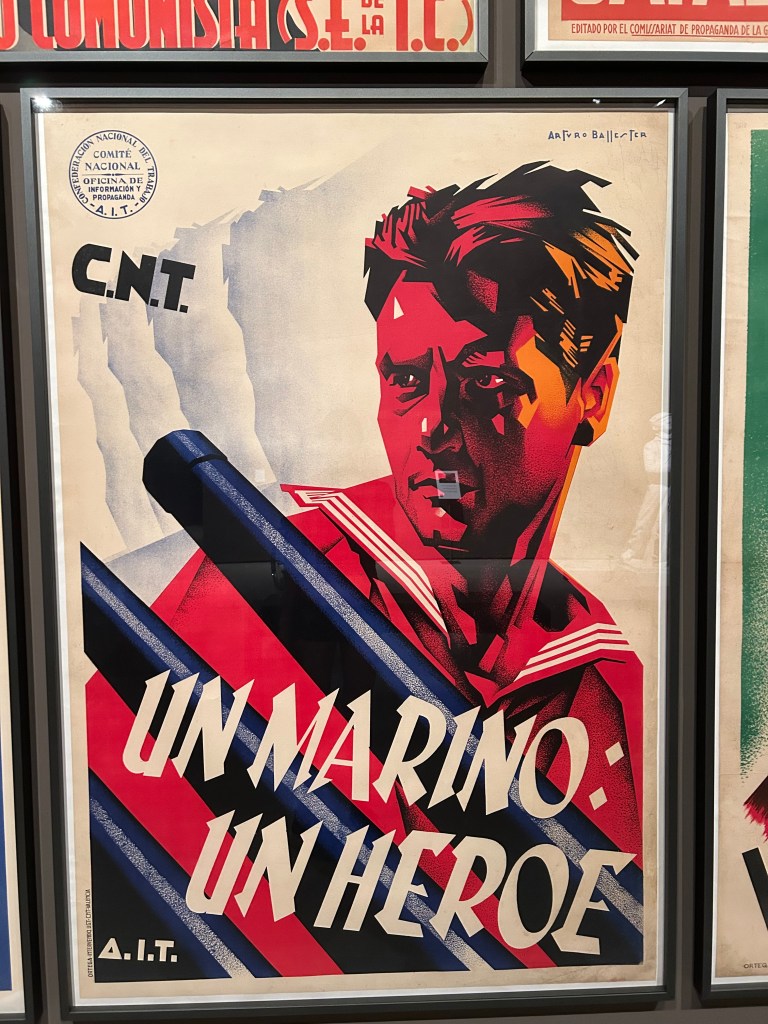
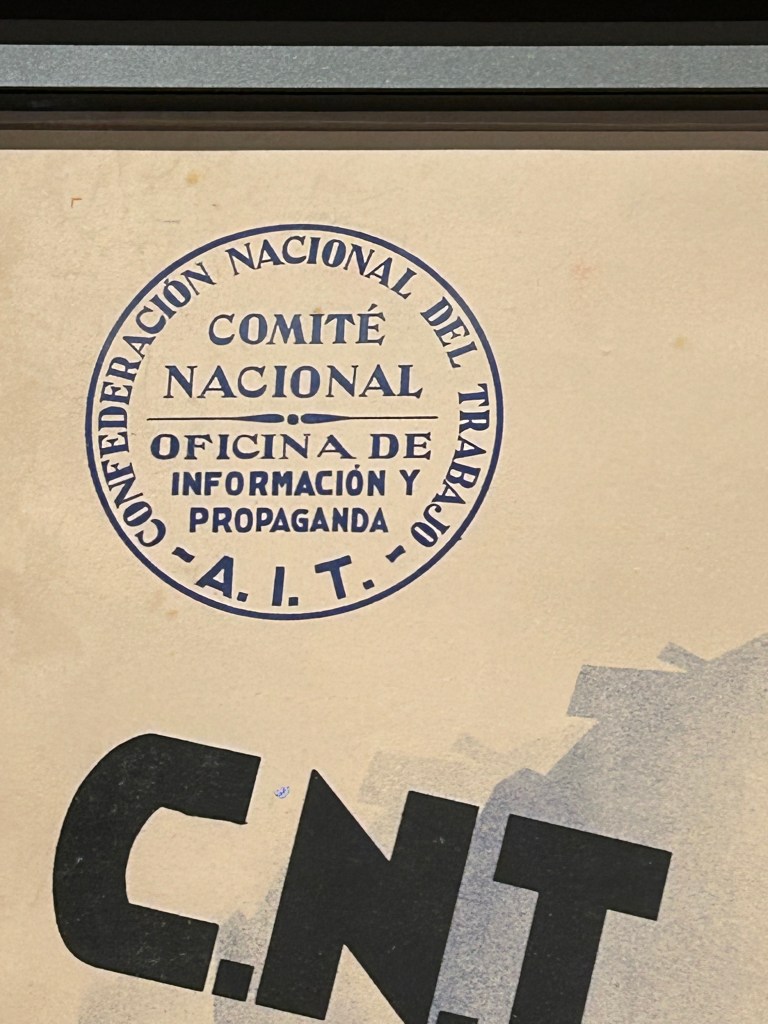
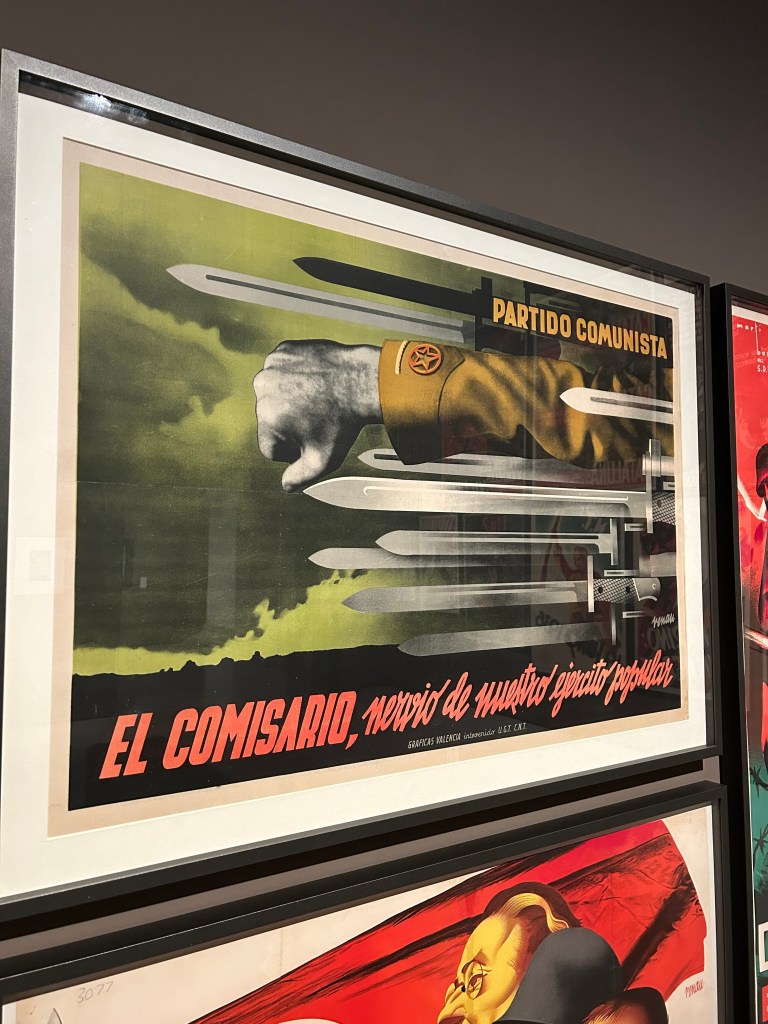
Another part of the exhibit featured a plethora of Caudillo regime militaristic propaganda posters. Interestingly, these posters were alongside other posters calling for an independent Catalonian government, communism, and other social issues/protests. In placing the posters together, it became clear that although the propaganda posters were prevalent, so was resistance to the regime. My perception of the regime prior to the exhibit was that it was unable to be met with resistance; however, these posters that called for change and advertised protests clearly demonstrate that the regime was met with blatant resistance. I was especially drawn to this exhibit and its propaganda because of the clashing sides represented.
The next set of propaganda artwork was an enormous collection of antisemitic works (which do not deserve to be featured). What was extremely troubling about this exhibit was that it only mentioned these works as propaganda a few times, leaving viewers that did not see the couple of signs susceptible to the propaganda. Many of these pieces showed extremely offensive depictions of Jewish people. Often, the people were hurting or killing Jesus, committing crimes, or were in the process of being converted to Christianity. In our current time in which antisemitism is rising, it is especially worrying to see a lack of labeling these pieces as propaganda. In the cases above about Caudillo propaganda in which it was made explicitly clear that the pieces were propaganda, displaying the pieces themselves made sense and served an educational purpose. On the other hand, the antisemitic works were treated with much less criticism which is disgusting.
Although displayed labeled propaganda can often serve an effective educational purpose, displaying propaganda that is both poorly labeled, and aligns with an extremely turbulent issue can be dangerous. I am not saying that abusive forms of government, and resistance movements are not prevalent today; however, antisemitism is at the forefront of many minds. On another note, I think that people more generally are drawn to propaganda because it is fascinating to see the ways in which we can be manipulated by something as simple as a poster, or something as complicated and elegant as a Picasso painting. Depending on the goal of the propagator, the use of artistic mediums can be highly effective in furthering their message. Because people are so drawn to looking at propaganda, it needs to be effectively labeled and explained as such in order to avoid promoting the original propaganda itself.
 Revolutionary Cities