
The Walter Benjamin Trail almost killed me, not only figuratively but literally: I was standing on the edge of a cliff. This hike was brutal and I want to contradict Prof. Bjork-James’s statement that this trail is an “intermediate to difficult” hike. However, besides the difficulty of this hike, I was grateful for the opportunity to hike on the trail many Jewish people used to escape the Nazi genocide. Seeing that a multitude of people had come before me on this trail pushed me to finish this hike.
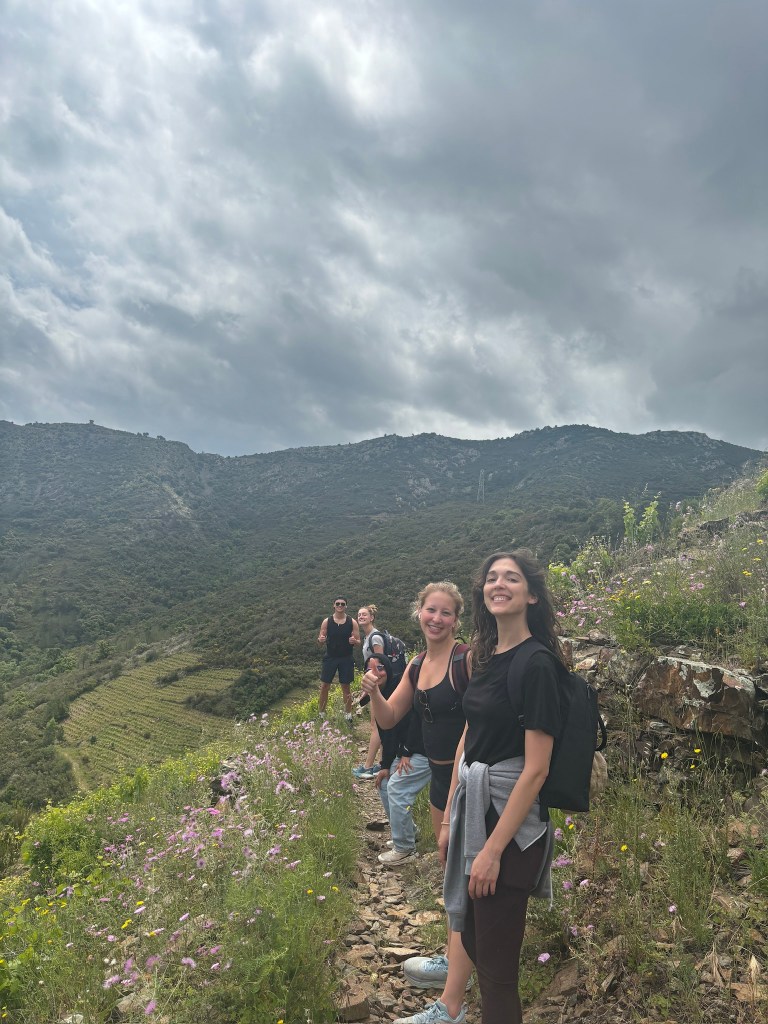
When on the hike itself, I knew I was going to write one of my blog posts about this experience in some way. Daydreaming to distract myself from the shooting pain in my feet, I kept wondering who was Walter Benjamin? Why is this infamous trail memorialized after him? On the hike I knew very little about Benjamain besides that he was a writer and used this very trail to cross France and Spain.
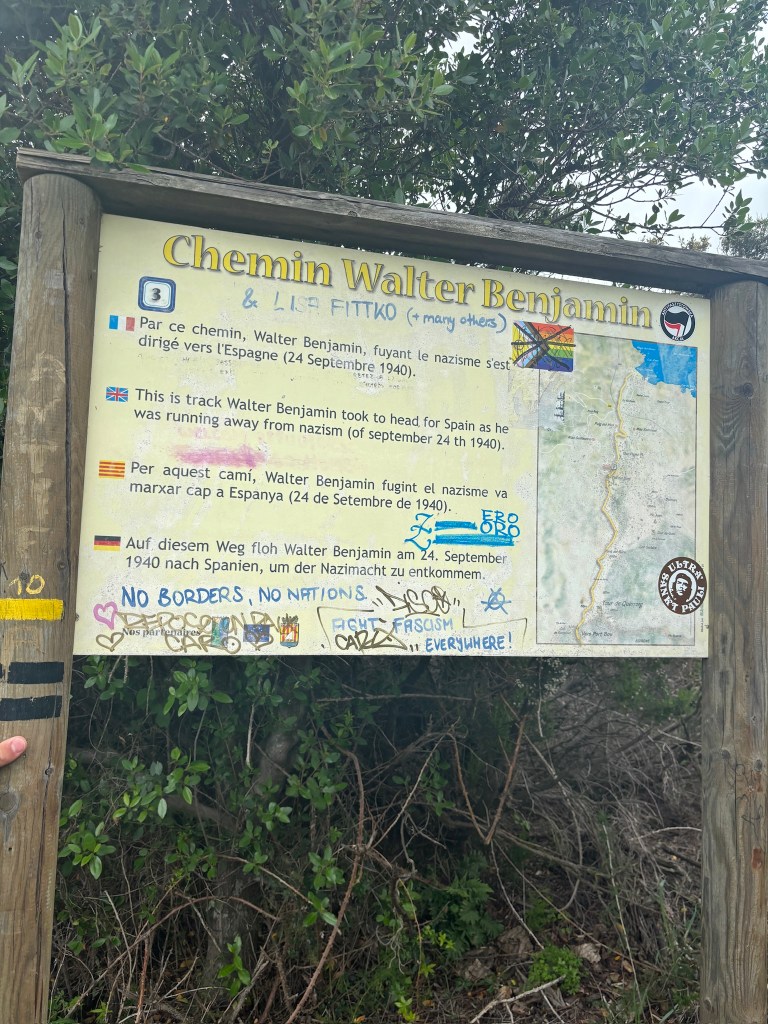
After researching, I now know that Walter Benjamin was a German writer and philosopher. He primarily wrote about Marxist ideals in his philosophy essays, analyzing literary novels critically. After the rise of nazism in Germany, Benjamin forcibly relocated to France. He soon fled to the South of France after the Nazi invasion of Northern France in 1940. To again escape persecution, Benjamin attempted to flee France by hiking to the Spanish border. On the way to the Spanish border, he was informed that he would be arrested in the border town of Port-Bou, instead deciding to take his own life. The trail was memorialized to Walter Benjamin as his last journey: across the Pyrenees from Banyuls-sur-Mer in France to Portbou in Spain. His philosophy of anti-fascism continues today and his gravestone is marked in Portbou with the quote: “There is no document of culture that is not at the same time a document of barbarism.”
Looking back to the hike, it amazes me how I walked on the same ground as Walter Benjamin. His legacy reflects the resilience of the Jewish population against extermination. Benjamin is a representative of all of the people who used this escape route to avoid Nazi persecution. This hike also reminded me of the deportation museum in Marseille. The brutal and cruel nature of Nazi belief emphasizes the importance of this trail. Jewish people were able to escape death by using this trail, which cannot be said about the many others whose innocent lives were taken.
 Revolutionary Cities