
In September of 1940, Walter Benjamin, a writer and Jew, crossed the French-Spanish border by way of the Pyrenees Mountains. He and many other Jews escaped France via this border to get to Spain because Spasin was a safer place for Jews than France was once the Nazis took over (even though, as we seen in the Museums here, there was still lots of Anti-Semitism in Spain). Those who were escaping France via this trail were doing so in the darkness of night, with lots of their belongings, and before a proper trail was paved. It must have been incredibly dangerous and physically demanding. After doing this trial myself, I can’t even imagine how people, like Walter Benjamin, were able to do this.
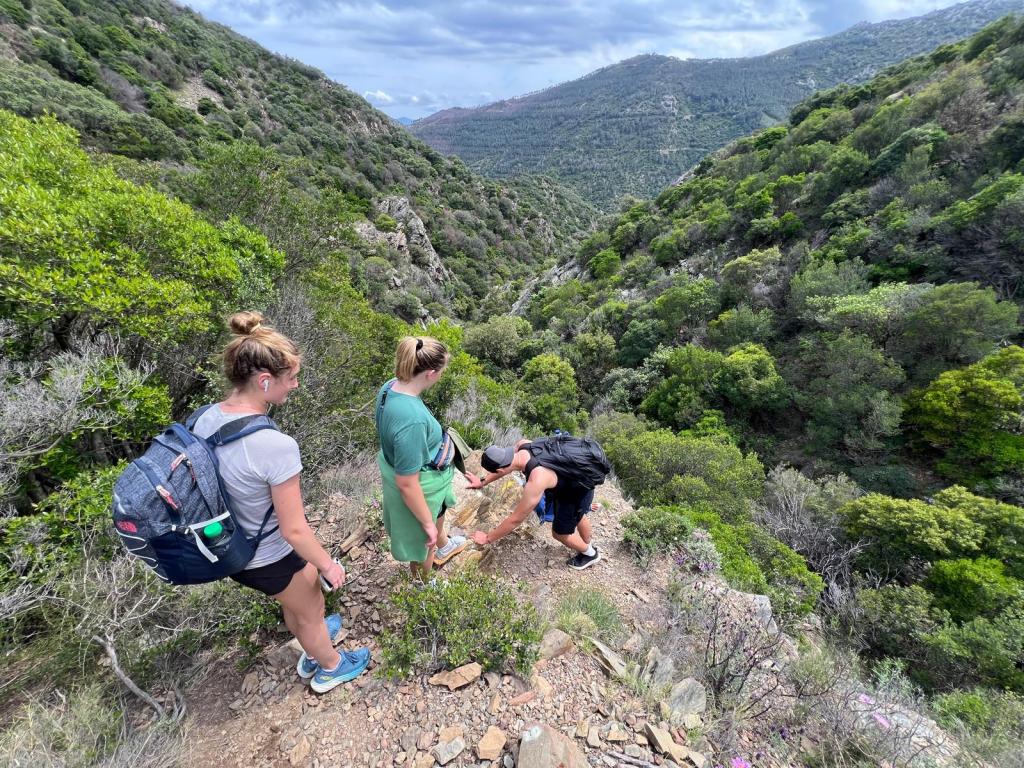
The part of the trail that we hiked was about 9 miles. The first half was incredibly steep uphill. We hiked straight up for about 4 miles before stopping for lunch. The saving grace of this uphill hike was the beautiful views that we saw along the way. After lunch, we had a second wave of energy and we started downhill. Surprisingly, downhill was much harder. It was incredibly steep and the path was not well paved. Many hikers in our group, myself included, took small tumbles on the downhill portion. We did the hike in just under 5 hours. It was challenging, tiring, and rewarding all at the same time.
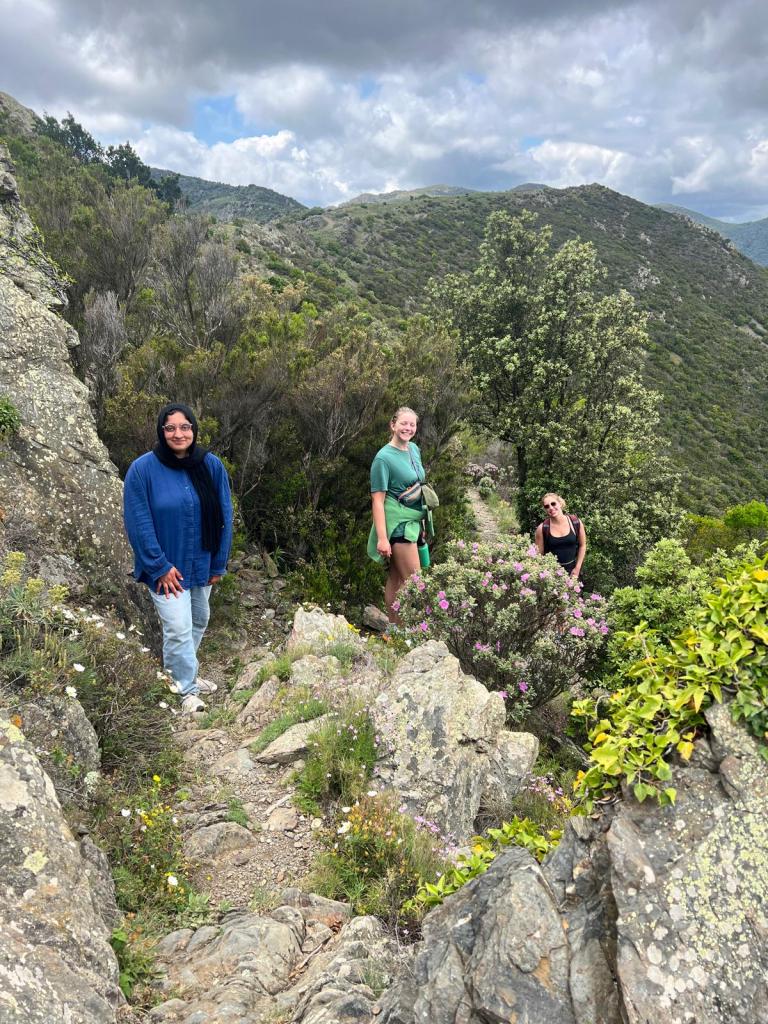
I really enjoyed the hike, but as we were walking, I couldn’t help but imagine what it must have been like for the Jews making the trip. For one, the path in the light of the day was honestly kind of dangerous. Some of the rocks weren’t secure and we were walking very close to the edge. At times I was worried about someone sliding over the edge. This made me think about the refugees when they were on this hike. Not only were they walking on this treacherous path in the dark, but they were also carrying their belongings and were malnourished (or at least a lot of them were). Every time I felt myself getting tired or wanting to complain, I would think about the Jewish people who had to make this trek under incredibly stressful and dangerous conditions. This was a hike that we were lucky enough to do for fun, but thousands of people had to make this hike to survive. This was an incredible experience and I am so glad I decided to join the hike group.
In addition to this hike made me think about the experiences that European Jews and others had to go through during the Holocaust and WII, this hike also made me think about how the physical and geopolitical characteristics of the French-Spanish border region impacted the success (or lack thereof) and challenges of Jewish escapes during Holocaust. For one, in several places along the hike I saw graffiti or stickers saying “No Borders, No Nations, Stop Deportations!”.

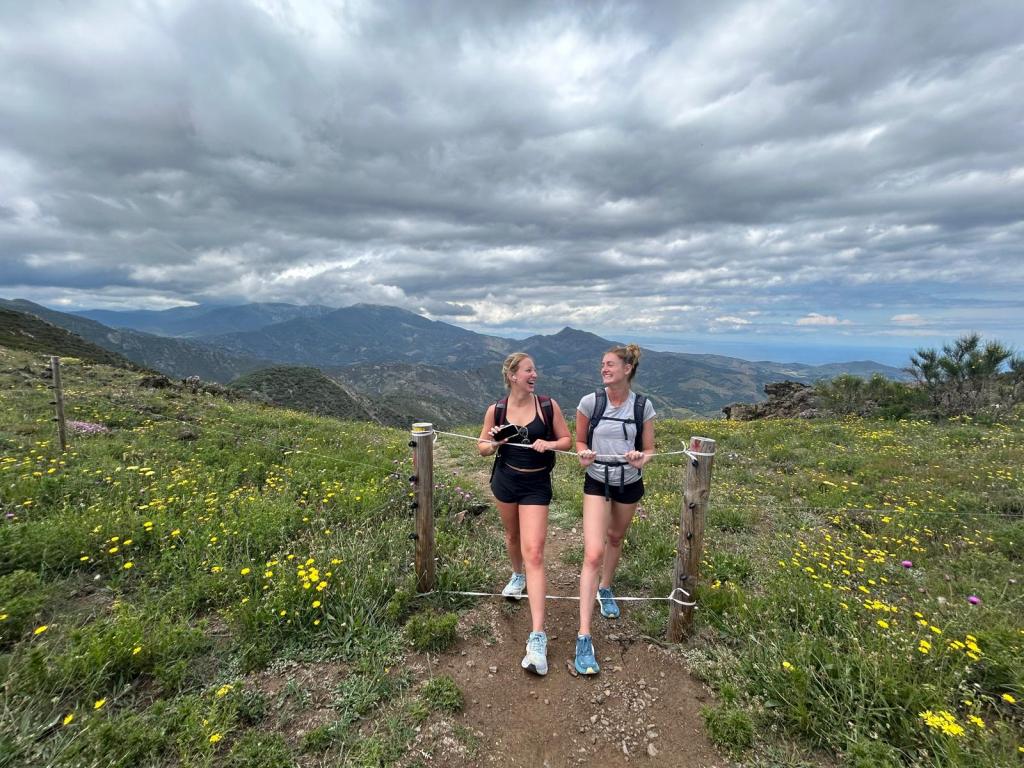
It makes sense that a slogan like that would be popular on a Holocaust escape route. As we saw in the Trans-Alantic Episode, escapees had to make this trek at night to avoid border security and military personnel from blocking them from migrating. Today, when we did this hike, the only thing “stopping us” from crossing the border was a thin wire fence that we stepped right over.
Europe and the EU have made migration and travel between fellow EU countries very easy, but most European countries, like the United States, are not willing to take refugees and migrants. We saw many examples of this in the Deportation Museum in Paris; these examples were both from modern-day and years and years ago. This just speaks to the fact that borders, nations, and migration have always been an issue. The Holocaust and other instances of genocide and political oppression increase migration.
Going back to France and Spain specifically, during the Holocaust, German soldiers wanted to prevent “undesirables” from migrating out of German-occupied territories. That is why so many Jews wanted to go to Spain. However, Spain was not necessarily happy to accept all refugees. This is yet another reason why Jews had to make the trek at night. If there genuinely weren’t nations or borders, we would be global citizens, able to move freely throughout the world with no consequences. This is a nice thought. I am not sure how practical it would be, but it does sound quite idyllic.
This cry for “No Borders. No Nations.” was relevant during WWII and is still present to this day. The barriers that borders create are a cause for consideration when thinking about migration and deportation. Specifically, during the Holocaust, the French-Spanish border posed enormous physical and political challenges. Physically speaking, the treacherous terrain of the Pyrenees was very dangerous to hike and physically challenging. Politically, while Franco’s Spain posed its risks with an unclear stance about refugees during WWII, it ultimately served as a crucial passage to safer destinations. The combination of these factors required immense determination and resourcefulness from those attempting to flee German Persecution. This hike gave me such immense appreciation and empathy for Jews fleeing the Holocaust when, and has helped me better understand the dangers of modern-day deportation and migration across national borders.
 Revolutionary Cities