
Over the last couple of weeks, I had the opportunity to visit two powerful exhibits: the Musée national de l’histoire de l’immigration in Paris and the Mémorial des Déportations in Marseille. Both museums provided harrowing insights into France’s dark history of deportations during the 1940s and a reflective lens on the country’s current struggles with racism and xenophobia.
The Story of the Bac Family
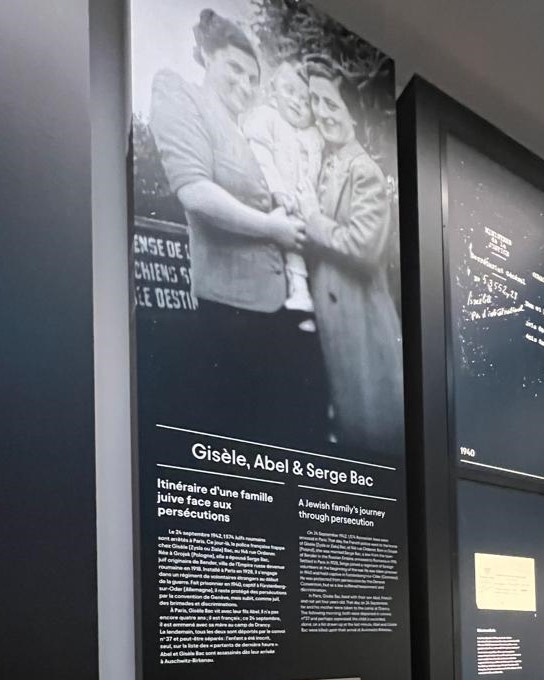
One story that particularly moved me was that of Gisele, Abel, and Serge Bac, a Romanian Jewish family who settled in Paris in the 1920s. Their tale, showcased at the Musée national de l’histoire de l’immigration, encapsulates the terror and inhumanity faced by many during the Holocaust. In 1942, the Bac family was arrested during the infamous Vel’ d’Hiv Roundup, a mass arrest of Jews in Paris conducted by French police under Nazi orders.
Gisele, Abel, and their young son Serge were forcibly taken from their home, separated from each other, and deported to different concentration camps. Gisele was sent to Auschwitz, Abel to Dachau, and Serge, just a child, ended up in Buchenwald. The separation not only tore their family apart but also stripped them of their humanity and hope. Their story is a painful reminder of the brutality inflicted upon Jewish families and many others deemed undesirable by the Nazi regime and its collaborators.
Stories from the Mémorial des Déportations
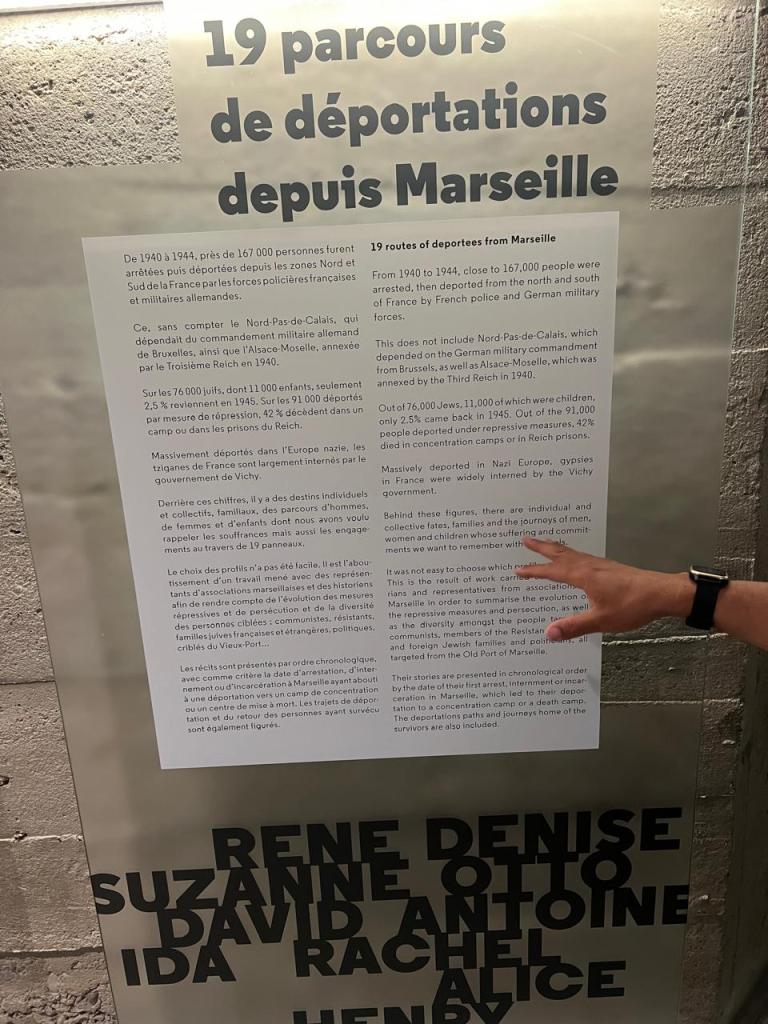
In Marseille, the Mémorial des Déportations presented additional heart-wrenching narratives of those who suffered under the Vichy regime. One particularly striking account was of a young political dissident named Jean, who was deported for his involvement in the French Resistance. Jean’s courage and eventual deportation to a concentration camp highlight the broad scope of those targeted—not just Jews, but also political opponents, intellectuals, and anyone perceived as a threat to the regime.
These stories from both museums illustrate the tragic consequences of intolerance and authoritarianism. They serve as a crucial historical record, ensuring that the atrocities of the past are not forgotten and emphasizing the importance of vigilance against such ideologies.
Why France Conducted Deportations
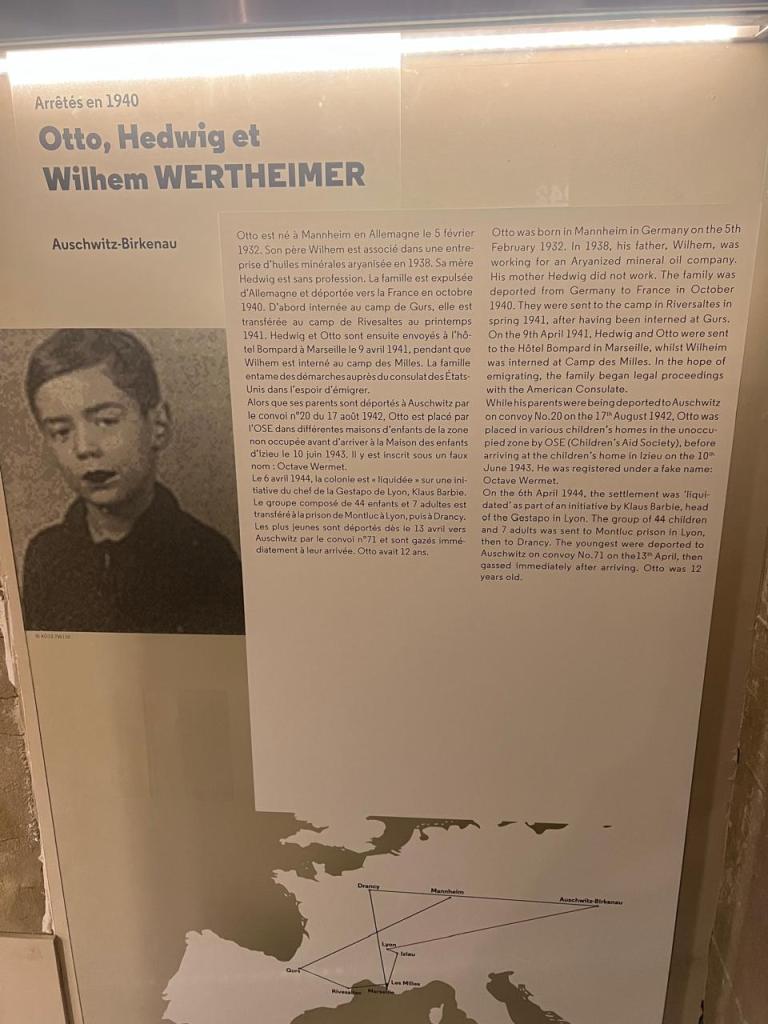
The deportations in France during the 1940s were driven by a toxic combination of anti-Semitism, political repression, and collaboration with Nazi Germany. The Vichy regime, which governed unoccupied France and French colonies, actively participated in Nazi policies to maintain its power and appease German occupiers. This included the persecution and deportation of Jews, political dissidents, Roma, and others.
Modern-Day Reflections: Racism and Islamophobia
While France has made significant strides since the 1940s, issues of racism and xenophobia persist. Today, Muslims often find themselves targets of discrimination and Islamophobia. This is evident in various laws and social attitudes that disproportionately affect Muslim communities, such as the bans on religious symbols in schools and public spaces.
Fear of the “other” remains a powerful force in society, often manifesting in policies and rhetoric that marginalize minority groups. However, there are positive signs of progress and inclusion. France has also become a refuge for many immigrants, particularly from the Middle East, who have fled conflict and persecution.
Positive Stories of Immigrants
Despite challenges, many immigrants have made significant contributions to French society. One inspiring example is Riad Sattouf, a Franco-Syrian cartoonist whose works, like The Arab of the Future, have garnered international acclaim for their insightful and often humorous depictions of life in the Middle East and France. His success story is a testament to the rich cultural contributions that immigrants bring to their new homes.
Another notable figure is Leïla Slimani, a Moroccan-French author who won the prestigious Prix Goncourt for her novel Chanson Douce. Her literary achievements highlight the diverse voices and experiences that enrich French culture.
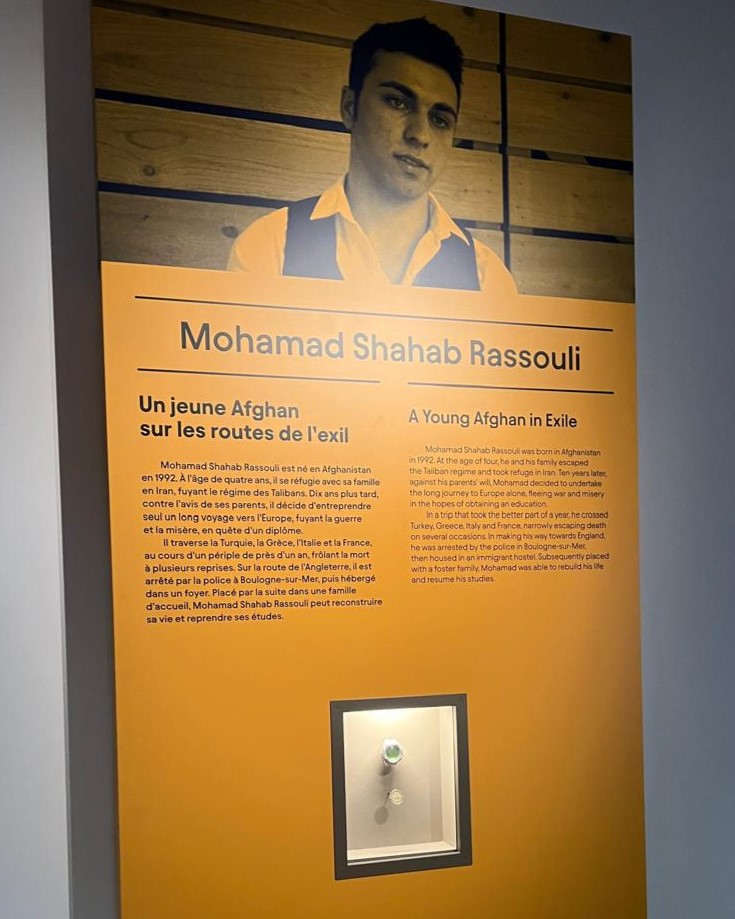
Lastly, the inspiring story of Muhammad Shahab Rassouli, an Afghan refugee who escaped to Europe, and after multiple encounters with death on his journey across continents, found asylum in France. Ironically I found this story exhibited in the same museum (Musée national de l’histoire de l’immigration) as that of the Bac Jewish family, highlighting a stark contrast in the role of the French state.
Conclusion
The exhibits at the Musée national de l’histoire de l’immigration and the Mémorial des Déportations offer a stark reminder of the consequences of hate and intolerance. They also serve as a call to action for contemporary society to embrace diversity and fight against discrimination. While France’s history includes periods of profound injustice, the stories of resilience and success among its immigrant populations provide hope for a more inclusive future. By learning from the past and celebrating the contributions of all its citizens, France can continue to progress towards a society where everyone is valued and respected.
 Revolutionary Cities