
Much like the other spaces we have thus had the opportunity to explore and visit, I noted the local environment as we approached the Museu d’Història de Barcelona (MUHBA). As a native of Nashville, I was instantly recognized the general feel of the neighborhood MUHBA was situated: urban revival. Like those of the United States, and most famously in the Rust Belt, the area felt like it had been effectively repurposed into modern mixed-used developments from old factories. From new parks to shiny glass-covered towers, the area of MUHBA felt distant to the Barcelona I had become familiar with, but it also prepared me to learn the deep narratives of Barcelona’s complex past. This visit wasn’t just a tour through a time-honored city; it was a dive into how migration, urban density, and inequality have interwoven to craft a landscape ripe for revolution.
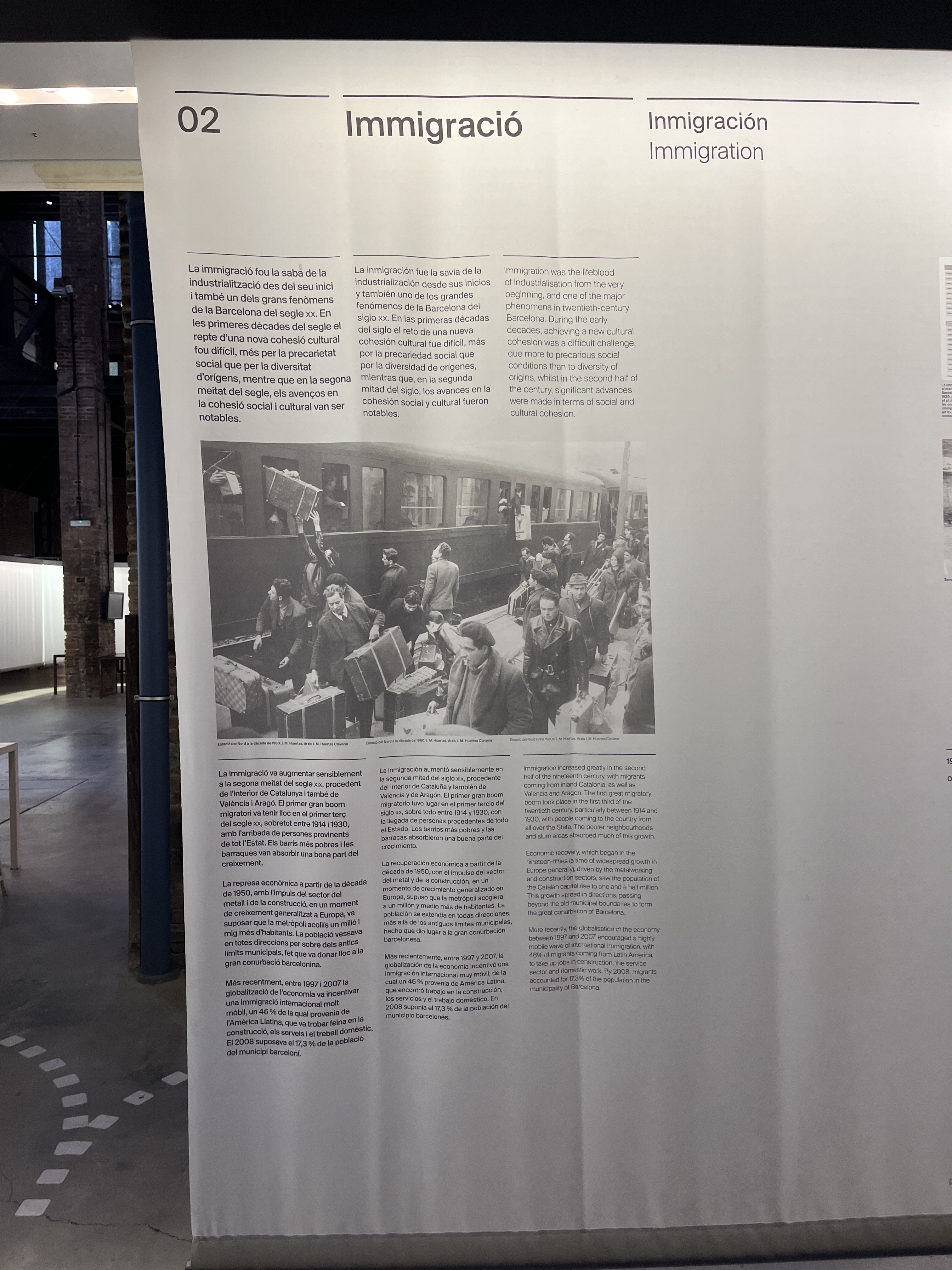
The Museu d’Història de Barcelona (MUHBA) does a remarkable job of displaying how waves of migrants have continuously shaped the city’s identity, focusing largely on the actual labor and urban spaces of these people as they settled down. As I wandered through the exhibits, I saw evidence of how each influx of migrants added a new layer to the urban fabric, often settling in densely populated areas of the city, where the promise of jobs and better living conditions clashed with the reality of cramped living spaces and scarce resources. In fact, I was surprised to learn about the provision of municipal resources like running water was initially dictated through private industry, ensuring that migrant-concentrated neighborhoods, which were often more affordable, did not have access to basic services. In fact, one of the most striking aspects highlighted in the museum was the relationship between these densely populated urban areas and the rise of social inequality. It was in these congested environments that the seeds of discontent and revolutionary fervor grew. The museum’s narrative made it clear that such conditions didn’t just make revolution possible; they made it almost inevitable.
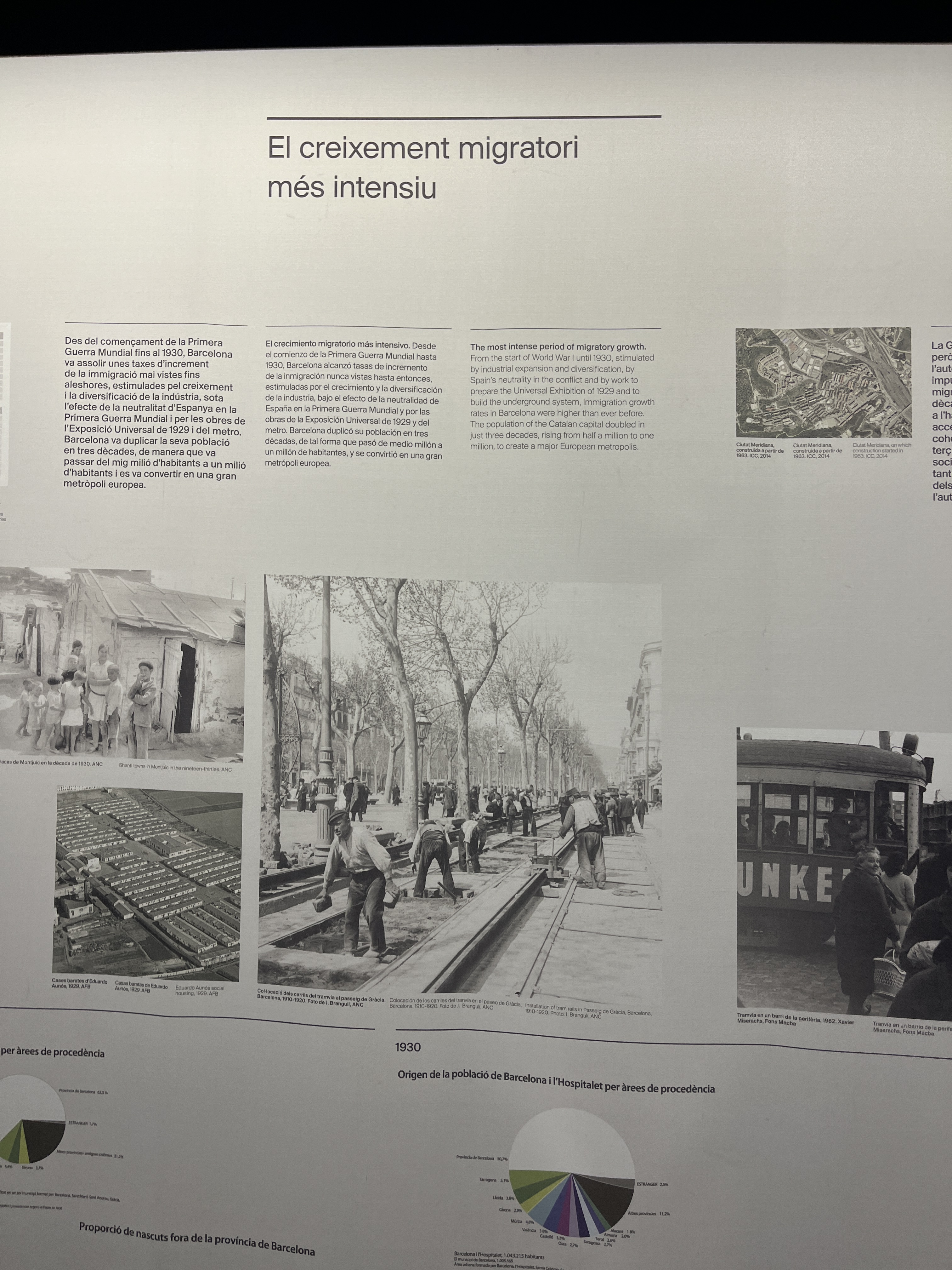
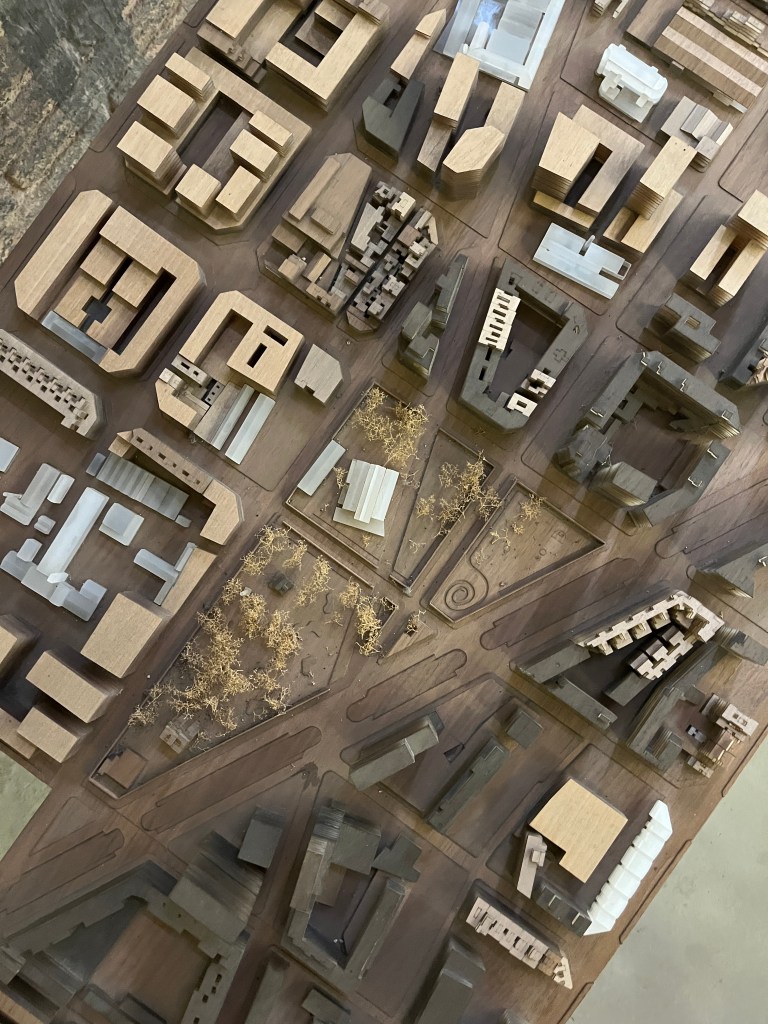
As I delved deeper into the city’s history through the dynamic graphics and historical objects, I could trace the evolution of Barcelona’s urban landscape. Each map and model showed a growing city bursting at its seams, integrating new waves of inhabitants while grappling with the existing socio-economic disparities. The museum expertly depicted how these pressures did not simmer in isolation. This trend further grew during the Industrial Revolution, which attracted rural migrants and international workers alike, each group adding to the city’s dense population and further exacerbating the conditions of inequality. As factories sprang up, so did worker’s tenements, with little regard for living conditions. This part of the museum emphasized how such unchecked urban expansion led to severe social stratification, setting the stage for the labor movements and anarchist groups that later sought to overturn the status quo.
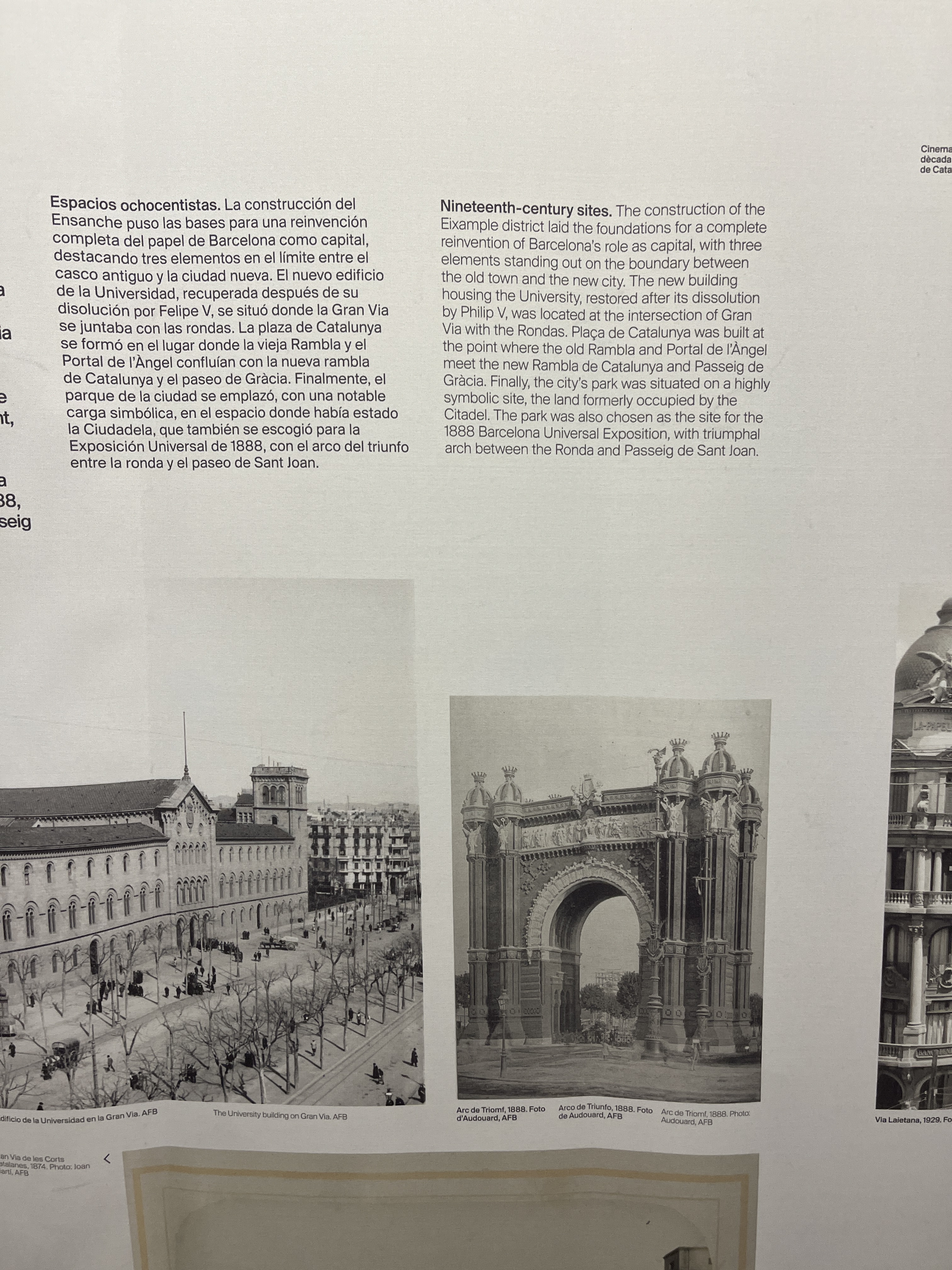
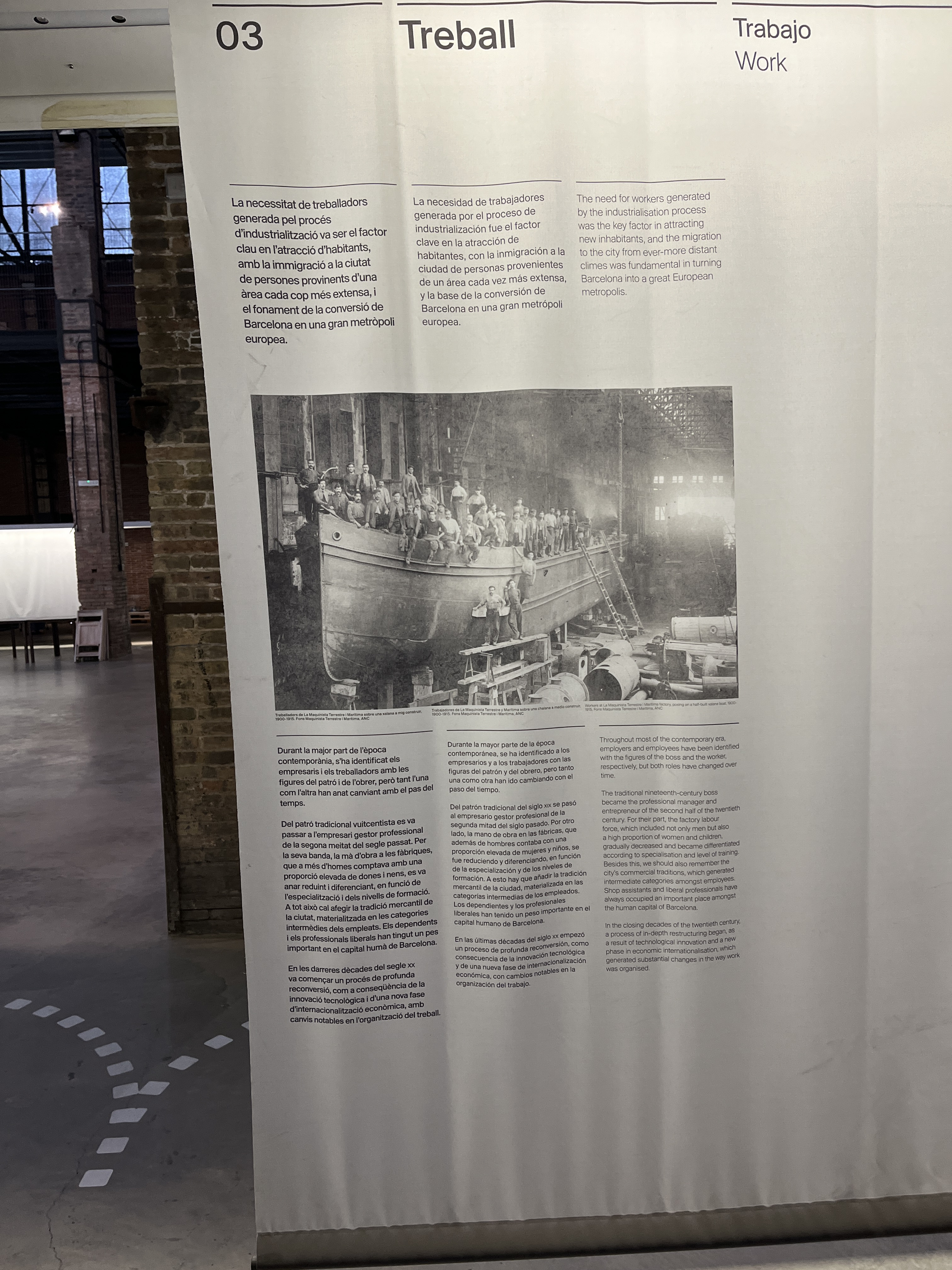

Moving to the modern era, it is clear that these historical forces have shaped Barcelona’s development, and I appreciated MUHBA’s ability to delve into migration trends that shaped the city, as well as how repression today has intertwined with Catalonia’s broader struggle for autonomy and recognition. In fact, the last exhibits demonstrate Barcelona’s growth into a cultural hub of its own, furthering developing its unique art and heritage. As such, my visit to the Museu d’Història de Barcelona enabled me to understand how migration, coupled with the challenges of urban density and inequality, didn’t just shape Barcelona’s physical landscape but also its social and political ethos. These elements combined created a fertile ground for revolutionary movements, making Barcelona a dynamic center of change throughout its history. The museum effectively captured the spirit of Barcelona as a city that, despite its challenges, has shown time and again a remarkable capacity to adapt and evolve.
 Revolutionary Cities